
Archive

February 2026

Browsing

We also break down next week’s catalysts to watch to help you prepare for the week ahead.

In this article:

    This week’s tech sector performance

    Tariff concerns sent global stocks drifting on Monday (February 23), with US futures pointing lower at the start of the week even though the Nasdaq Composite (INDEXNASDAQ:.IXIC) ended a three week losing streak the previous week.

    Additionally, a Citrini Research report published on Sunday (February 22) projects that the dominance of artificial intelligence (AI) could lead to the collapse of the “human-centric consumer economy” and cause widespread unemployment, adding to the growing anxiety around AI-induced displacement.

    Markets had a subdued reaction to Anthropic’s announcement ⁠of 10 new AI tools on Tuesday (February 24), including plugins that could help with investment banking tasks, private equity engineering and design.

    Mohit Kumar, chief Europe economist at Jefferies Financial Group (NYSE:JEF), noted that, although AI disruption will remain a market theme for the foreseeable future, the company’s emphasis on “partnership rather than displacement” may have spurred a software sector rally in Tuesday afternoon trading.

    Also aiding the software recovery was a handful of experts pushing back against the Citrini report, including a response published by Citadel Securities’ Frank Flight, who said the thesis is far-fetched at best.

    On Wednesday (February 25), ahead of NVIDIA’s (NASDAQ:NVDA) much-anticipated earnings report, tech stocks boosted indexes in North America, Europe and Asia, with the S&P/TSX Composite Index (INDEXTSI:OSPTX) seeing advances in AI-related software and diversified tech amid positive quarterly reports from Canada’s main financial institutions; meanwhile, semiconductor companies led gains on Wall Street.

    While positive sentiment lifted Canada’s main index to a new record on Thursday (February 26), the US had a weaker session after investors were unimpressed with NVIDIA’S results.

    Although NVIDIA beat expectations, guidance shows deceleration. A 3.2 percent drop in the PHLX Semiconductor Sector (INDEXNASDAQ:SOX) index dragged the Nasdaq down to close 1.2 percent lower.

    Indexes in Canada and the US slipped on Friday (February 27) as renewed positive sentiment from earlier in the week ultimately gave way to concerns over AI-led disruptions.

    3 tech stocks moving markets this week

    1. NVIDIA (NASDAQ:NVDA)

    NVIDIA, which makes up almost 8 percent of the S&P 500 (INDEXSP:.INX), was up on Wednesday ahead of its Q4 earnings report, which showed US$68.1 billion in revenue, an increase of 73 percent. Net income was up 94 percent to US$42.9 billion, and the company generated US$96.6 billion in free cashflow for the year.

    The results exceeded analysts’ estimates, but shares were flat in after-hours trading, despite CEO Jensen Huang’s claim of “skyrocketing” AI agent adoption and sales growth of 78 percent for the current quarter.

    2. Salesforce (NYSE:CRM)

    Salesforce rose modestly intraday ahead of its Q4 earnings release on Wednesday, which showed revenue growth of 12 percent year-on-year, beating analysts’ estimates at US$11.2 billion. Full-year revenue was at US$41.5 billion, up 10 percent, with the company reporting remaining performance obligations of US$72.4 billion, a 14 percent increase.

    Annual recurring revenue from the company’s AI agent platform, Agentforce, led quarterly gains, reaching US$800 million, up 169 percent. Despite CEO Marc Benioff’s revenue projection of US$63 billion by the 2030 fiscal year, 2027 fiscal year guidance of US$45.8 billion to US$46.2 billion was below the consensus estimate of US$46.06 billion, which sent shares down around 5 percent in after-hours trading. The company also said it anticipates a slowdown in core business expansion, projecting organic growth of only 7 to 8 percent for the upcoming fiscal year.

    2. Dell Technologies (NYSE:DELL)

    Dell Technologies was trading higher ahead of its Q4 earnings. The firm delivered revenue of US$33.4 billion, beating estimates, and full-year revenue of a record US$113.5 billion.

    Sales of AI servers hit US$9.8 billion, up 100 percent year-on-year, with a US$64 billion AI pipeline and US$43 billion backlog. Earnings per share topped estimates of US$2.36, coming in at US$2.86.

    Momentum continued after hours following CEO Mike Dell’s comments on “skyrocketing” hyperscaler demand for AI infrastructure despite some margin pressure, with Dell’s share price soaring about 11 percent.

    Top tech news of the week

                Tech ETF performance

                Tech exchange-traded funds (ETFs) track baskets of major tech stocks, meaning their performance helps investors gauge the overall performance of the niches they cover.

                This week, the iShares Semiconductor ETF (NASDAQ:SOXX) advanced by 1.83 percent, while the Invesco PHLX Semiconductor ETF (NASDAQ:SOXQ) advanced by 1.77 percent.

                The VanEck Semiconductor ETF (NASDAQ:SMH) also increased by 1.76 percent.

                Tech news to watch next week

                Next week there will be light earnings, with results expected from MongoDB (NASDAQ:MDB), Alibaba (NYSE:BABA) and Broadcom (NASDAQ:AVGO); however, macro data alongside speeches from US Federal Reserve presidents will dominate alongside tariff developments and AI CAPEX and inflation concerns.

                Securities Disclosure: I, Meagen Seatter, hold no direct investment interest in any company mentioned in this article.
                This post appeared first on investingnews.com

                When you open a chatbot, stream a show or back up photos to the cloud, you are tapping into a vast network of data centers. These facilities power artificial intelligence, search engines and online services we use every day. Now there is a growing debate over who should pay for the electricity those data centers consume.

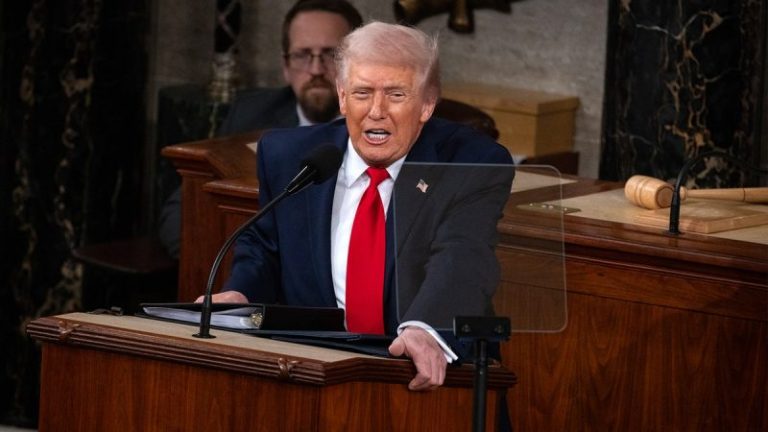
                During President Trump’s State of the Union address this week, he introduced a new initiative called the ‘ratepayer protection pledge’ to shift AI-driven electricity costs away from consumers. The core idea is simple. 

                Tech companies that run energy-intensive AI data centers should cover the cost of the extra electricity they require rather than passing those costs on to everyday customers through higher utility rates.

                It sounds simple. The hard part is what happens next.

                Get my best tech tips, urgent security alerts and exclusive deals delivered straight to your inbox. Plus, you’ll get instant access to my Ultimate Scam Survival Guide — free when you join my CYBERGUY.COM newsletter.

                Why AI is driving a surge in electricity demand

                AI systems require enormous computing power. That computing power requires enormous electricity. Today’s data centers can consume as much power as a small city. As AI tools expand across business, healthcare, finance and consumer apps, energy demand has risen sharply in certain regions.

                Utilities have warned that the current grid in many parts of the country was not built for this level of concentrated demand. Upgrading substations, transmission lines and generation capacity costs money. Traditionally, those costs can influence rates paid by homes and small businesses. That is where the pledge comes in.

                What the ratepayer protection pledge is designed to do

                Under the ratepayer protection pledge, large technology companies would:

                • Cover the full cost of additional electricity tied to their data centers
                • Build their own on-site power generation to reduce strain on the public grid

                Supporters say this approach separates residential energy costs from large-scale AI expansion. In other words, your household bill should not rise simply because a new AI data center opens nearby. So far, Anthropic is the clearest public backer. CyberGuy reached out to Anthropic for a comment on its role in the pledge. A company spokesperson referred us to a tweet from Anthropic Head of External Affairs Sarah Heck.

                ‘American families shouldn’t pick up the tab for AI,’ Heck wrote in a post on X. ‘In support of the White House ratepayer protection pledge, Anthropic has committed to covering 100% of electricity price increases that consumers face from our data centers.’

                That makes Anthropic one of the first major AI companies to publicly state it will absorb consumer electricity price increases tied to its data center operations. Other major firms may be close behind. The White House reportedly plans to host Microsoft, Meta and Anthropic in early March to discuss formalizing a broader deal, though attendance and final terms have not been confirmed publicly.

                Microsoft also expressed support for the initiative. 

                ‘The ratepayer protection pledge is an important step,’ Brad Smith, Microsoft vice chair and president, said in a statement to CyberGuy. ‘We appreciate the administration’s work to ensure that data centers don’t contribute to higher electricity prices for consumers.’  

                Industry groups also point to companies such as Google and utilities including Duke Energy and Georgia Power as making consumer-focused commitments tied to data center growth. However, enforcement mechanisms and long-term regulatory details remain unclear.

                How this could change the economics of AI

                AI infrastructure is already one of the most expensive technology buildouts in history. Companies are investing billions in chips, servers and real estate. If firms must also finance dedicated power plants or pay premium rates for grid upgrades, the cost of running AI systems increases further. That could lead to:

                • Slower expansion in some markets
                • Greater investment in renewable energy and storage
                • More partnerships between tech firms and utilities

                Energy strategy may become just as important as computing strategy. For consumers, this shift signals that electricity is now a central part of the AI conversation. AI is no longer only about software. It is also about infrastructure.

                The bigger consumer tech picture

                AI is becoming embedded in smartphones, search engines, office software and home devices. As adoption grows, so does the hidden infrastructure supporting it. Energy is now part of the conversation around everyday technology. Every AI-generated image, voice command or cloud backup depends on a power-hungry network of servers.

                By asking companies to account more directly for their electricity use, policymakers are acknowledging a new reality. The digital world runs on very physical resources. For you, that shift could mean more transparency. It also raises new questions about sustainability, local impact and long-term costs.

                What this means for you

                If you are a homeowner or renter, the practical question is simple. Will this protect my electric bill? In theory, separating data center energy costs from residential rates could reduce the risk of price spikes tied to AI growth. If companies fund their own generation or grid upgrades, utilities may have less reason to spread those costs among all customers.

                That said, utility pricing is complex. It depends on state regulators, long-term planning and local energy markets.

                Here is what you can watch for in your area:

                • New data center construction announcements
                • Utility filings that mention large commercial load growth
                • Public service commission decisions on rate adjustments

                Even if you rarely use AI tools, your community could feel the effects of a nearby data center. The pledge is intended to keep those large-scale power demands from showing up in your monthly bill.

                Think your devices and data are truly protected? Take this quick quiz to see where your digital habits stand. From passwords to Wi-Fi settings, you’ll get a personalized breakdown of what you’re doing right and what needs improvement. Take my Quiz here: Cyberguy.com.

                Kurt’s key takeaways

                The ratepayer protection pledge highlights an important turning point. AI is no longer only about innovation and speed. It is also about energy and accountability. If tech companies truly absorb the cost of their expanding power needs, households may avoid some of the financial strain tied to rapid AI growth. If not, utility bills could become an unexpected front line in the AI era.

                As AI tools become part of daily life, how much extra power are you willing to support to keep them running? Let us know by writing to us at Cyberguy.com.

                Get my best tech tips, urgent security alerts and exclusive deals delivered straight to your inbox. Plus, you’ll get instant access to my Ultimate Scam Survival Guide – free when you join my CYBERGUY.COM newsletter.

                Copyright 2026 CyberGuy.com. All rights reserved.

                Related Article

                Scoop: Trump brings Big Tech to White House to curb power costs amid AI boom
                This post appeared first on FOX NEWS

                Perth, Australia (ABN Newswire) – Basin Energy Limited (ASX:BSN) (OTCMKTS:BSNEF) announced that it has now executed a Mineral Rights Purchase and Sale Agreement (‘MRPSA’) with Green Canada Corporation Inc (‘GCC’), a 54% owned subsidiary of PTX Metals Inc. (TSXV: PTX) (‘PTX’) to sell the Marshall Uranium Project (‘Marshall’), located in Saskatchewan, Canada. This follows the binding letter of intent, as announced on the 24th November 2025.

                Key Highlights

                – Mineral Rights Purchase and Sale Agreement executed, advancing Basin’s sale of 100% of the Marshall Uranium Project to Green Canada Corporation Inc (‘GCC’).

                – GCC progressing toward public listing on Canadian Stock Exchange, in conjunction with a reverse takeover of Maackk Capital Corp.

                – Basin will receive consideration of up to:

                o C$600,000 payable in cash in four equal annual instalments;

                o C$300,000 payable in shares over three equal annual instalments; and

                o 9.99% of the total issued capital of the newly listed entity.

                – Basin retains strong upside optionality, including a 25% project level buyback option and threeyear Right of first refusal (ROFR) on any future sale.

                – Basin and CanAlaska Uranium Ltd (CVE:CVV) (‘CanAlaska’) have also granted GCC a 9-month exclusivity for the North Millennium Project.

                The transaction is now conditional primarily on the proposed Reverse Takeover (‘RTO’) by GCC of Maackk Capital Corp (‘MAACKK’) and concurrent minimum C$2.5 million financing and admission to the Canadian Securities Exchange (‘CSE’) or such other stock exchange as may be mutually agreed upon by the parties.

                In addition to the Marshall agreement, Basin and CanAlaska have agreed to grant GCC a 9-month exclusivity right to conduct due diligence and, if satisfactory, negotiate the terms of an earn-in option to acquire up to a 51% interest in the North Millennium joint venture project of CanAlaska and BSN.

                Managing Director, Pete Moorhouse commented:

                ‘The execution of the definitive agreement marks a key milestone in unlocking value from the Marshall Uranium Project, while maintaining meaningful upside exposure for Basin shareholders.

                With GCC progressing toward its public listing and associated financing, we are pleased to see a clear pathway toward funded exploration and drill testing at Marshall in the near term. Importantly, Basin retains leverage and upside through our equity interest, buyback option and right of first refusal, ensuring continued alignment with the project’s success.’

                Terms of the Deal

                In consideration, GCC has agreed to the following payments to Basin:

                – C$600,000 payable in cash in four equal annual instalments, with the first payment due on closing of the transaction;

                – C$300,000 payable in shares, issuable in three equal annual instalments based on the 5-day Volume-Weighted Average Price on the business day immediately preceding the date of issuance; and

                – 9.99% of the total issued and outstanding resulting issuer shares on a non-diluted basis after giving effect to the concurrent financing at the time of closing of the proposed RTO, subject to 12-month escrow.

                Basin will receive an additional 400,000 shares in the resulting issuer upon closing of the RTO in return for granting the 9-month exclusivity right in the North Millennium joint venture.

                Basin will have a right of first refusal on any sale of the Marshall Project by GCC for a period of three years following the closing date of the transaction. In addition, Basin will retain a repurchase right to acquire from GCC a 25% interest in the Marshall Project for C$1,000,000 for a period commencing on the closing date and ending on the earlier of: the date that is five years from the closing date or the date on which GCC has incurred total exploration expenditures of C$10,000,000 on the Marshall Project.

                Pursuant to the terms of the MRPSA, GCC is required to fund exploration expenditures for an initial work program on the Marshall Project to be carried out within twenty-four months from the closing. The Initial Work Program will have a budget in an amount that is the greater of C$1,500,000, and the minimum amount required to maintain the mineral claims comprising the Marshall Project in good standing under applicable governmental regulations.

                Basin will also have the right to nominate one director to the board of the resulting issuer.

                GCC will retain the right to withdraw from the transaction at any time after the closing of the transaction, in which case the project will return to Basin and no further payments will be required.

                The Company has considered the application of ASX Listing Rule 11.4(a) and considers it does not apply.

                About Green Canada Corporation

                GCC is a 54% owned subsidiary of PTX Metals Inc. (CVE:PTX) and a uranium exploration company with a portfolio of projects located in Thelon Basin, Nunavut, the Athabasca Basin, Saskatchewan and Quebec. Concurrent to the LOI to acquire Basin’s Marshall project, GCC announced that it has entered into a binding letter of intent with MAACKK pursuant to which GCC and MAACKK intend to complete a transaction that would result in a reverse take-over of MAACKK by the shareholders of GCC (the ‘Proposed RTO’). Closing of the Proposed RTO will be subject to, among other things, requisite regulatory approval for the listing of the resulting issuer of the Proposed RTO (the ‘Resulting Issuer’) on the Canadian Securities Exchange or such other stock exchange as may be mutually agreed upon by the parties, along with completion of concurrent financing and execution of the definitive agreements in respect of the acquisition of the Marshall project.

                Upon completion of the Proposed RTO, the current directors and officers of MAACKK will resign and it is anticipated that the board of directors of the Resulting Issuer will be reconstituted to consist of Richard J. Mazur, Greg Ferron, Olivier Crottaz and a representative from the Basin.

                About the Marshall and North Millennium Projects

                The Marshall project is 100% owned by Basin, and the North Millennium Project is under joint venture agreement on a 40:60 basis with CanAlaska.

                The Marshall and North Millennium projects are located less than 11 km from Cameco Corporation’s Millennium deposit (104.8Mlb at 3.8% U3O8) and around 40 km from the prolific McArthur River uranium mine, one of the world’s highest-grade uranium operations, refer to Figure 1*. Both projects are deemed prospective for unconformity style uranium exploration.

                In 2024, ground electromagnetics (‘EM’) at Marshall identified three main targets which confirms the geological and exploration model. Of note is Target 1, refer to Figure 2*, where modelled EM plates below the unconformity align with a sandstone Z-Tipper Axis Electromagnetic (‘ZTEM’) anomaly, which is interpreted to be alteration within sandstone. The identification of these targets is encouraging and consistent with regional trends in the southeastern Athabasca and provides increased confidence in drill hole targeting.

                *To view tables and figures, please visit:
                https://abnnewswire.net/lnk/R3LUUKE8

                About Basin Energy Ltd:

                Basin Energy Ltd (ASX:BSN) (OTCMKTS:BSNEF) is a green energy metals exploration and development company with an interest in three highly prospective projects positioned in the southeast corner and margins of the world-renowned Athabasca Basin in Canada and has recently acquired a significant portfolio of Green Energy Metals exploration assets located in Scandinavia.

                Source:
                Basin Energy Ltd

                Contact:
                Pete Moorhouse
                Managing Director
                pete.m@basinenergy.com.au
                +61 7 3667 7449

                Chloe Hayes
                Investor and Media Relations
                chloe@janemorganmanagement.com.au
                +61 458619317

                News Provided by ABN Newswire via QuoteMedia

                This post appeared first on investingnews.com

                The Department of Justice on Thursday sued five additional states, requesting that their election data be shared with the Trump administration amid its push for access to voter rolls from states across the country.

                Four states President Donald Trump carried in the last three presidential elections — Utah, Oklahoma, Kentucky and West Virginia — were slapped with the latest legal action, along with New Jersey.

                The DOJ has now sued more than two dozen states in efforts to access election records, with most of the states being controlled by Democrats.

                Assistant Attorney General for Civil Rights Harmeet Dhillon suggested that state election officials were ‘choosing to fight us in court rather than show their work’ with voter roll access.

                ‘We will not be deterred, regardless of party affiliation, from carrying out critical election integrity legal duties,’ she said in a statement on Thursday.

                ‘The Justice Department will continue to fulfill its oversight role dutifully, neutrally, and transparently wherever Americans vote in federal elections,’ Dhillon said.

                The Trump administration has intensified its efforts to take over elections in recent months even though the U.S. Constitution gives states, not federal officials, the authority to run elections. Most states have their secretary of state oversee elections.

                Access to election information varies by state, but election officials generally release redacted versions of their voter rolls to the public and government agencies, according to Politico. However, the DOJ has demanded that states give the federal government unredacted files, including voters’ private data such as their driver’s license numbers and the last four digits of their Social Security numbers.

                ‘Accurate, well-maintained voter rolls are a requisite for the election integrity that the American people deserve,’ Attorney General Pam Bondi said in a statement. ‘This latest series of litigation underscores that this Department of Justice is fulfilling its duty to ensure transparency, voter roll maintenance, and secure elections across the country.’

                The DOJ has argued the states are in violation of the Civil Rights Act of 1960, which affirms that the attorney general can request voter records from election officials, but state officials contend that the department is seeking an escalation of the administration’s wider attempts to become involved in state election proceedings.

                ‘Neither state nor federal law entitles the Department of Justice to collect private information on law-abiding American citizens. Utahns can be assured that my office will always follow the Constitution and the law, protect voters’ rights, and administer free and fair elections,’ Utah Lt. Gov. Deidre Henderson said in a statement to Politico.

                Kentucky Secretary of State Michael Adams also criticized the lawsuit, saying the state’s elections were ‘a national success story.’

                ‘Kentucky law protects voters’ personal information, and I will not voluntarily commit a data breach by providing Kentuckians’ personal data to the federal bureaucracy unless a court order tells me to,’ he said in a statement to the outlet.

                West Virginia Secretary of State Kris Warner’s office said it had not yet been served with a lawsuit.

                ‘Regardless, I think Secretary Warner’s comments to the DOJ were pretty clear. Bring it on! The federal government is not going to get any personal information on West Virginia voters as long as Kris Warner is Secretary of State,’ spokesperson Mike Queen said in a statement to Politico.

                Earlier this month, the FBI executed a search warrant at an election office in Fulton County, Georgia, seizing ballots and other voting records from 2020, according to local officials. The Peach State went to former President Joe Biden in 2020, but Trump carried the state in 2024.

                In efforts to ensure only American citizens are voting, Trump has also urged Congress to pass the SAVE America Act, which would require voters in federal elections to prove citizenship by providing a photo ID and other documentation, such as a passport or birth certificate.

                Related Article

                Georgia’s Fulton County files motion seeking return of 2020 election materials seized by FBI
                This post appeared first on FOX NEWS

                Precious metals are recovering their safe-haven demand appeal this week.

                Gold, silver and platinum are up this week, all still down from the all-time highs recorded in January. Escalating geopolitical tensions and US trade policy shifts are once again at center stage in this sector of the commodities market.

                Let’s take a look at what’s got the precious metals moving over the past week.

                Gold price

                After dropping as low as US$4,400 per ounce on February 2, this past week gold has taken another run well above the key psychological US$5,000 mark; albeit still hundreds of dollars away from its record high of close to US$5,600 reached on January 28.

                After trading in a tight range of US$4,985 to US$5,000 for much of Thursday (February 19), the price of gold managed to rise as high as US$5,107 on Friday. That upward climb continued on Monday (February 23) to an intraday high of US$5,248 — a level gold hasn’t seen in a month.

                The yellow metal lost that steam by Tuesday’s close with the precious metal trading back down at US$5,143. By Wednesday morning, gold was once again making a run at the US$5,200 level to reach an intraday high of US$5,217.58 at 9:10 a.m. PST. However, it couldn’t hang on for long, sinking back down to US$5,166.25 as of 1:40pm PST on profit-taking and a stronger dollar.

                Gold price chart, February 18, 2026 to February 25, 2026.

                Here are the primary drivers for gold this past week:

                    • Dips this week were brought on by slight downward pressure due to profit-taking and a stronger US dollar.

                    In other gold news, JPMorgan Chase (NYSE:JPM) raised its gold forecast to US$6,300 by the end of 2026, citing a ‘reserve currency paradigm shift’ as countries diversify away from the dollar, and ‘significant investor diversification’.

                    Looking at major events in the gold mining sector, Kinross Gold’s (TSX:K,NYSE:KGC) Great Bear development in the Red Lake district of Ontario, Canada, has been designated for a reduced permitting timeline under the provincial government’s One Project, One Process (1P1P) framework. 1P1P is a streamlined approval system aimed at reducing government review times by 50 percent. The high-grade, combined open-pit and underground operation is expected to produce more than 500,000 ounces of gold annually during its peak years.

                    Silver price

                    The price of silver is still well below its all-time high of more than US$120 per ounce it reached on January 29, 2026. For the most part, the white metal continued to track the same trends as gold this week.

                    Like gold, silver traded sideways Thursday (February 19) in the US$77.50 to US$78.50 range, and then surged the following day to an intraday high of US$84.61.

                    For most of Monday (February 23), silver continued higher but at a much slower pace, to reach as high as US$88.96. Tuesday brought another day of tight trading in the US$86.70 to US$88.10; however, by Wednesday morning the silver price had managed to break through the US$90 level on the same safe-haven demand forces pushing gold prices higher this week.

                    The price of silver hit an intraday high of US$91.15 at 11:55am PST before sliding back down below US$89 in the afternoon session.

                    Silver price chart, February 18, 2026 to February 25, 2026.

                    Silver may still not be back into the triple digits, but its showing strong support despite a slump in artificial intelligence (AI) tech stocks. Silver, the most electrically and thermally conductive metal on the planet, is considered a key material for AI tech, particularly in data centers and high-performance computing. Silver is also in a structural supply deficit which continues to provide upward pressure on silver prices

                    In silver mining news, Lundin Gold (TSX:LUG,OTCQX:LUGDF) announced a US$670 million silver stream deal with LunR Royalties (TSXV:LUNR) on its Fruta del Norte mine.

                    Platinum price

                    Platinum continues to be one of the top performing metals, reaching a 12-year high in recent weeks. This past week it has gained more than 8 percent. Sideways trading on Thursday (February 19) turned into an upward climb on Friday with prices for platinum rising from a low of US$2,060.10 to a high of US$2,117.40 per ounce.

                    The first few days of this new week were marked by volatility with wider price swings. The platinum price reached a three week high of US$2,226.30 in late day trading Tuesday. The jump was driven by a combination of geopolitical tensions, trade uncertainty, and structural supply constraints.

                    Platinum continued its ascent in overnight trading, reaching as high as US$2,360.50 in early morning trading, and managed to finish off the day just below the US$2,300 level.

                    Platinum price chart, February 18, 2026 to February 25, 2026.

                    Platinum prices are benefitting from renewed tariff jitters, geopolitical safe-haven demand, and persistent supply tightness from major producer South Africa.

                    The emerging hydrogen economy is also adding to demand for the metal on top of robust demand from the auto sector. Consumers are shifting back toward internal combustion engine and diesel vehicles as hurdles to EV adoption remain challenging. This is highly supportive of demand for platinum as its primary use is in automotive catalysts.

                    On the supply side, global platinum reserves remain critically low, especially as the world’s biggest producer South Africa continues to be plagued by power shortages and operational disruptions.

                    In platinum mining news, Valterra Platinum declared a dividend of 45 rand a share for a total 2025 payout of 12 billion rand (US$757 million) after its net income more than doubled to 15.4 billion rand. Bloomberg reported that the size of the dividend “smashed analyst expectations as earnings jumped last year on soaring metals prices”.

                    Palladium price

                    Palladium has been the black sheep of the precious metals family for the past few years, remaining well below its March 2022 all-time record of US$3,440.76 per ounce.

                    On Thursday (February 19), unlike its sister metals, palladium rallied 4.8 percent to an intraday high of US$1,767.50. The metal closed out last week with another nearly 3.9 percent gain to US$1,836.

                    On Monday, palladium lost some of that ground to close out the day at US$1,820. After dipping to a low of US$1,763 in early morning trading on Tuesday, the price of the metal regained those losses and more by the end of the trading day reaching as high as US$1,843.

                    Wednesday (February 25) morning brought a spike in palladium prices to US$1,935 as the metal went along for the same ride as platinum, before falling back to the US$1,860 level in afternoon trading.

                    Palladium price chart, February 18, 2026 to February 25, 2026.

                    As is the case with platinum, demand for palladium is getting support from the auto sector. Rising prices for platinum are leading automakers to make the swap to palladium.

                    The US Department of Commerce’s preliminary statement of support for anti-dumping duties of approximately 133 percent on unwrought Russian palladium imports is still shaping the outlook for palladium on the supply side. This follows a petition from Sibanye-Stillwater (NYSE:SBSW) over allegations that Russian metal is being sold in the US at less than fair value. A final decision is expected in the case by June of this year.

                    Securities Disclosure: I, Melissa Pistilli, hold no direct investment interest in any company mentioned in this article.

                    This post appeared first on investingnews.com

                    President Donald Trump has drawn his line. Now the clock is running.

                    After publicly giving Iran roughly 10 days to 15 days to reach a nuclear agreement, Trump used his State of the Union address to make clear the deadline is backed by force. 

                    ‘I will never allow the world’s number one sponsor of terror … to have a nuclear weapon,’ he told lawmakers Tuesday night.

                    The president first outlined the short timeline Feb. 19, saying the world would know within ‘probably 10 days’ whether Tehran was prepared to strike what he called a meaningful deal. 

                    ‘I would think that would be enough time — 10, 15 days, pretty much maximum,’ Trump said, warning that absent an agreement, ‘it’s going to be unfortunate for them.’

                    On Tuesday, he reinforced the pressure from the House chamber, telling Congress negotiations are underway, but Iran has not met his core condition. 

                    ‘We are in negotiations with them,’ Trump said. ‘They want to make a deal, but we haven’t heard those secret words: ‘We will never have a nuclear weapon.”

                    He also pointed back to the 2025 U.S. strike on Iranian nuclear infrastructure, describing Operation Midnight Hammer as having ‘obliterated Iran’s nuclear weapons program.’ 

                    After that operation, he said, Tehran was warned ‘to make no future attempts to rebuild its weapons program,’ adding that Iran is now ‘starting it all over again.’

                    The combination of a defined diplomatic window and a public reminder of U.S. military action marks a sharper phase in the standoff, as talks in Geneva unfold under mounting pressure.

                    Trump has not detailed what specific action would follow if Iran refuses his terms. But he told reporters in mid-February that if a meaningful agreement does not materialize, ‘bad things will happen,’ and acknowledged he is considering further steps.

                    With the State of the Union complete and the president’s timeline already in motion, the coming days are likely to determine whether the administration secures a nuclear concession — or shifts toward a more confrontational path in the Middle East.

                    The diplomatic ultimatum is underscored by the largest assembly of U.S. naval power in the Middle East since the 2003 invasion of Iraq. 

                    The world’s most advanced aircraft carrier, the USS Gerald R. Ford, arrived at Souda Bay, Crete, Monday. The Ford joined the USS Abraham Lincoln, which has been conducting 24-hour flight operations in the Arabian Sea since late January.

                    Between the two strike groups, the U.S. now commands a fleet of 14 major warships, including nine Arleigh Burke-class destroyers armed with Tomahawk cruise missiles.

                    Meanwhile 12 U.S. F-22 Raptor stealth fighters touched down at Ovda Airbase in southern Israel. 

                    As national security analyst Joe Funderburke noted in the Small Wars Journal, ‘The F-22 is not a simple show-of-force aircraft. It is designed to suppress enemy air defenses and protect penetrating strike platforms like the B-2 Spirit bomber, the same combination used to devastate Iran’s deeply buried nuclear facilities at Fordow and Natanz nine months ago.’

                    The president’s reminder of Operation Midnight Hammer — which utilized B-2 bombers to drop 30,000-pound ‘bunker buster’ munitions — serves as the tactical blueprint for what follows the current deadline. 

                    While the 2025 operation was a ‘surgical’ surprise strike, the current buildup suggests a far broader mission set, potentially due to Iran’s threat of an aggressive response. 

                    Iran’s response to Operation Midnight Hammer was measured and the U.S. had warning. This time, Iran has vowed a more forceful response and says any U.S. troops operating in the Middle East could be open targets. 

                    Amid his sharper diplomatic timeline, Trump also asserted that Iranian authorities had killed some 32,000 protesters in weeks of demonstrations that began in early January — a number far above independent estimates and Tehran’s own death toll. 

                    ‘Just over the last couple of months with the protests, they’ve killed at least, it looks like, 32,000 protesters — 32,000 protesters in their own country,’ the president said. ‘They shot them and hung them.’ 

                    Administration officials have signaled that any agreement would require Iran to halt all uranium enrichment and provide verifiable guarantees that its program cannot be reconstituted — terms Iran repeatedly has objected to.

                    Both Washington and Iran appear to believe the other is bluffing. 

                    Trump has framed the timeline as a final opportunity for diplomacy backed by overwhelming force. Iranian leaders, meanwhile, have publicly dismissed U.S. threats and warned that any strike would trigger retaliation against American forces and regional allies.

                    Still, U.S. negotiators will meet with Iranian envoys once again in Geneva Thursday.

                    Related Article

                    Trump gives Iran 10-day ultimatum, but experts signal talks may be buying time for strike
                    This post appeared first on FOX NEWS

                    Democratic Rep. Jasmine Crockett of Texas said Tuesday that she would ‘boycott’ President Donald Trump’s State of the Union speech.

                    She blasted him as a ‘wannabe king’ and described the present state of the union as ‘grim.’

                    ‘Tonight, I will boycott Donald Trump’s State of the Union address,’ she said in the statement. ‘The American people deserve better than a low-down, scamming wannabe king who plans to stand at that podium and spew more lies; and I refuse to legitimize the weaponization of the federal government, blatant lies and corruption, and the destruction of our Constitutional principles and democratic norms.’

                    Crockett, who is currently running in the Texas Democratic U.S. Senate primary, said she was not sent to D.C. ‘to coddle Donald Trump’s ego.’

                    ‘Instead of wasting time listening to Donald Trump lie to the American people, I will be back in Texas talking with families about the true state of our union: cuts to SNAP and Medicaid, rogue ICE agents on our streets, the Epstein cover-up, attacks on the First Amendment, and the unlawful tariffs that have made life too expensive for Texans,’ she said in the statement.

                    She indicated that the president has an ‘authoritarian agenda.’

                    ‘The current state of our union is grim, but it is not permanent. I will spend tonight continuing the fight to actually strengthen the State of the Union,’ she said in the statement.

                    Fox News Digital reached out to the White House for comment on Wednesday morning.

                    Related Article

                    Texas Democrat cries for voting Talarico over Crockett because ‘we need somebody who can win’
                    This post appeared first on FOX NEWS

                    The era of “smooth globalization” is over, and mining is entering a more fragmented, politically charged phase defined by strategic nationalism, according to speakers at S&P Global’s latest webinar.

                    Jason Holden, who opened the “State of the Market: Mining Q4 2025” session with a macro overview, said the industry is operating in a world increasingly shaped by supply chain security and state intervention.

                    “For decades we operated under a model of frictionless trade,” said Holden, a senior mining analyst at the firm. “That era is over. We’ve entered a world of strategic re-nationalization.”

                    While the base economic outlook remains resilient, with moderate growth and easing headline inflation, Holden warned that “sticky core inflation remains stubbornly high.”

                    For mining companies, that has two major implications: higher capital costs and less room for the easy-money valuation surges seen in past cycles. Central banks, led by the US Federal Reserve, are no longer aggressively tightening, but are also not on a clear-cut path to interest rate cuts.

                    “We’re no longer on a predictable path of easing,” Holden explained to listeners. “The market is now focused on if and when cuts might resume.” At the same time, geopolitical disputes are increasingly spilling into trade policy. The conversation around critical minerals, he noted, has shifted decisively.

                    “It’s no longer just about economics,’ said Holden. “It’s explicitly framed as national security.”

                    That shift is driving greater government intervention, subsidies, capital screening and “friend-shoring,” where materials are sourced from politically aligned nations.

                    Gold’s insurance premium

                    Nowhere has geopolitical risk been more visible than in gold.

                    The metal surged to fresh highs in early 2026 after setting 40 new records in 2024 and 53 more in 2025, a pace not seen since 1979. The price briefly pushed beyond US$5,500 per ounce at the start of the year.

                    “The message from this price action is unmistakable,” Holden said. “In an uncertain world, the market is paying a premium for insurance, and gold is the ultimate safe asset.”

                    While short-term flashpoints helped fuel the rally, the structural driver has been central bank buying. Since sanctions in 2022 prompted reserve managers to rethink US dollar exposure, official sector purchases have accelerated.

                    “The sustained buying from central banks is the real engine behind the rally,” Holden said.

                    S&P’s base case sees gold averaging US$4,247 per ounce in 2026, with upside potential toward US$6,000 by 2027 in a more bullish scenario.

                    Copper tightness, nickel politics

                    Luiz Amaral from S&P’s exploration team said copper ended 2025 on strong footing, with London Metal Exchange (LME) prices reaching US$12,500 per metric ton in December.

                    Supply-side tightness, a weaker US dollar and copper’s growing role in electrification supported prices. The US decision to formally list copper as a critical mineral reinforced its strategic importance.

                    S&P has lifted its 2026 copper price forecast to US$11,400 per metric ton, projecting a 543,000 metric ton concentrate deficit next year. However, the refined market is expected to move into surplus later in the decade as new smelter capacity ramps up. Longer term, the concentrate picture darkens again.

                    “Our base case shows a 3 million metric ton shortfall by 2036,” Amaral said.

                    Nickel’s recent rally, by contrast, has been driven more by policy than fundamentals. The price broke above US$18,000 per metric ton in January after Indonesia reduced its 2026 production quota.

                    “The market is responding emotionally to policy updates,” Amaral said, noting that despite the rally, the broader market remains in surplus and LME inventories are building.

                    Lithium rebounds amid persistent surplus

                    Lithium prices have also staged a sharp rebound, rising 57 percent in China between mid-December and mid-January on renewed demand optimism and supply concerns. Yet S&P expects the market to remain oversupplied for most of the decade, with deficits not emerging until the early 2030s.

                    New supply from Australia, Latin America and China continues to outpace demand growth, even as electric vehicles account for roughly 75 percent of lithium consumption through 2035.

                    Diverging margins

                    At the mine level, gold producers are enjoying some of the strongest margins in years, with prices rising faster than all-in sustaining costs. Silver has outperformed even more dramatically, climbing 154 percent in 2025 versus gold’s 71 percent gain, compressing the gold-silver ratio to below 70.

                    Battery metals face a tougher backdrop.

                    “Lithium and nickel continue to face margin pressure as prices lag elevated costs amid oversupply,” said Monica Ramirez from S&P’s mine economics and emissions team.

                    Across 12 metals analyzed, S&P sees a structurally higher cost environment emerging due to inflation, energy expenses and maturing ore bodies. Precious metals retain the strongest buffers, while copper remains positive but increasingly sensitive at the upper end of the cost curve.

                    Exploration at a crossroads

                    Despite record prices in some commodities, exploration spending tells a more cautious story.

                    Global exploration budgets totaled US$12.4 billion in 2025, down 1 percent year-on-year. Adjusted for inflation, spending has slipped back to levels last seen nearly two decades ago.

                    “Gold continues to dominate,” Amaral said, accounting for roughly half of global exploration budgets. Lithium, once a standout, saw budgets fall nearly 50 percent amid weaker prices.

                    More concerning is the structural shift away from grassroots exploration.

                    In the mid-1990s, two-thirds of spending targeted generative programs. Today, that share has fallen to a record low as companies prioritize near-mine and late-stage work.

                    “We are underinvesting at the very front end of the supply chain,” Amaral warned. Without renewed grassroots spending, the long-term discovery pipeline could suffer.

                    M&A: Quality over quantity

                    Mining M&A remained active into late 2025, though deal value normalized after earlier mega-mergers. Transaction value fell 45 percent quarter-on-quarter to US$16.1 billion, but deal count rose to its highest level in more than five years.

                    Gold led activity, with buyers focusing on large-scale, long-life assets in low-risk jurisdictions.

                    “Gold M&A today is no longer about simple volume growth,” Ramirez emphasized to viewers. “It’s about asset quality, jurisdictional safety and durable cashflow.”

                    As the webinar made clear, mining is navigating a landscape defined by geopolitical risk, tighter capital and structural cost pressures. For companies able to secure high-quality assets and control costs, opportunities remain, but the margin for error is narrowing.

                    Securities Disclosure: I, Georgia Williams, hold no direct investment interest in any company mentioned in this article.

                    This post appeared first on investingnews.com

                    The U.S. Secret Service-involved shooting of a man with a shotgun inside the secure perimeter of Mar-a-Lago over the weekend brought the Department of Homeland Security’s partial shutdown into new focus.

                    Two USSS agents and a Palm Beach County Sheriff’s Office deputy confronted and later shot and killed Austin Martin, 21, who authorities said slipped through a vehicular exit gate that had opened for a car before brandishing his weapon.

                    ‘They confronted a white male that was carrying a gas can and a shotgun. He was ordered to drop those two pieces of equipment that he had with him – at which time he put down the gas can, raised the shotgun to a shooting position… the deputy and the two Secret Service agents fired their weapons and neutralized the threat,’ according to Palm Beach County Sheriff Ric Bradshaw.

                    Those agents are among the many working their dangerous jobs without pay due to the ongoing partial shutdown of DHS, which Republicans say was brought on by Democrats’ demands that ICE, which remains funded through other means, be reformed.

                    Rep. Randy Fine, R-Fla., who represents Daytona Beach just up the coast from Mar-a-Lago, said the incident proves the bravery of the Secret Service no matter the circumstances.

                    ‘The attempted assassination of President Trump at Mar-a-Lago is a stark reminder of growing leftist political violence in our country,’ Fine said in a statement.

                    ‘Grateful to the Secret Service who neutralized the terrorist. Even as Democrats refuse to pay them because of their shutdown of the Department of Homeland Security, these men and women continue to stand their post.’

                    Top White House aide Stephen Miller offered an even more pointed response to the dynamic:

                    ‘Democrats voted to defund Secret Service, Homeland Security Investigations (who partner with Secret Service) and all the intelligence and law enforcement functions that support Secret Service,’ Miller said.

                    ‘Never before in history has federal law enforcement been purposefully defunded.’

                    House Small Business Committee Chairman Roger Williams of Texas added that Americans should take note of the agents who responded whether paid or not.

                    ‘As we continue to learn more about the armed man at Mar-a-Lago this morning, we must remember that the brave agents who responded are serving our country without pay due to the Democrat-led shutdown,’ Williams, R-Texas, said.

                    Prior to the incident, Senate Majority Whip John Barrasso, R-Wyo., warned that the Secret Service and other agencies like FEMA would be put in a bad spot if the partial shutdown went forward.

                    ‘Democrats are prioritizing illegal immigrant criminals ahead of the safety of the American people,’ he said in a February 12 floor speech.

                    At least one Democrat did react to the agent-involved shooting.

                    Rep. Lois Frankel of Florida, for whom Trump is technically a constituent at his Mar-a-Lago address, said that ‘political violence is never the answer.’

                    ‘Thank you to the Secret Service and Palm Beach County law enforcement for their swift response today and for their continued work in keeping the president safe,’ Frankel said.

                    The Northeast blizzard presents separate challenges for resource-suspended agencies like FEMA, while certain Homeland Security-run services, such as TSA escorts for members of Congress, are also suspended.

                    Fox News’ Elise Oggioni contributed to this report.

                    Related Article

                    Democrats risk FEMA disaster funding collapse as DHS shutdown hits Day 5
                    This post appeared first on FOX NEWS