Archive

April 2026

Browsing

FIRST ON FOX: The State Department has added business formal dress code guidance to its internal policy manual for the first time, establishing department-wide standards for employee attire.

The changes, implemented in recent days in the Foreign Affairs Manual — the department’s central repository for policies — mark the first time the agency has formally codified expectations for how diplomats and staff should dress in official settings.

“Representing the United States of America is an honor — and this new policy ensures our diplomats project credibility, respect, and the dignity of the nation we serve,” Assistant Secretary Dylan Johnson told Fox News Digital.

The updated policy applies broadly across the department for both civil service and foreign service employees.

DEPARTMENT TO ASK FOR BONDS OF UP TO $15,000 FOR VISA APPLICATIONS FROM A DOZEN MORE COUNTRIES

The move underscores a broader recalibration at the State Department, where Trump administration officials have sought to impose clearer standards around discipline, appearance and adherence to policy. 

A State Department official said the change was driven in part by concerns that some diplomats had been dressing “pretty informally” in recent years. 

“This should have happened a long time ago,” the official said. 

The formal dress code represents a shift away from Biden-era personnel policies that prioritized flexibility and cultural inclusivity, toward a more uniform and prescriptive standard for how U.S. diplomats present themselves.

“Appropriate attire and appearance will depend on the duties performed, the work environment, and the level of interaction with foreign interlocutors and other external stakeholders,” reads the manual, viewed by Fox News Digital. “For staff participating in meetings or other official engagements with foreign interlocutors, dress is Business Formal and personal appearance is polished and professional unless otherwise specified.”

The dress code update follows other recent changes to how the State Department evaluates and manages its workforce, including revisions to hiring and promotion criteria for Foreign Service officers. 

Earlier in 2026, the department replaced diversity, equity and inclusion-related benchmarks with a new core precept focused on “fidelity,” emphasizing adherence to U.S. government policy and chain-of-command authority.

Under the updated guidance, mid- and senior-level diplomats are expected to demonstrate loyalty by “zealously executing U.S. government policy” and resolving ambiguity in favor of leadership direction, according to internal documents previously reported by Fox News Digital.

Those changes came alongside broader efforts to restructure the department’s workforce, including plans to reduce staffing and consolidate offices, signaling a shift toward more standardized expectations for diplomatic personnel. The addition of a formal dress code marks the latest step in that direction.

A week after President Donald Trump urged Sydney Gruters to run for an open GOP-held congressional seat in Florida, the former executive director of the state’s New College Foundation and wife of Republican National Committee (RNC) Chair Joe Gruters declared her candidacy.

“As a working mother of three, I see firsthand how much pressure rising prices are putting on families across Southwest Florida,” Sydney Gruters said as she launched her campaign on Thursday. “From groceries and gas to housing and insurance, too many families, seniors and veterans are being stretched thin. I’m running for Congress to protect our conservative values and fight for the people of this district and give them a strong voice in Washington.”

With Trump’s support, Gruters is considered the clear frontrunner to succeed retiring longtime GOP Rep. Vern Buchanan, her former boss, in Florida’s right-leaning 16th Congressional District, which stretches from Tampa’s eastern suburbs south to Bradenton. Republicans currently control the House 218-214 and will be defending their fragile majority in this year’s midterm elections.

Trump, in a social media post on March 24, emphasized that Gruters would “fight tirelessly.”

RNC CHAIR BETS ON ‘SECRET WEAPON’ TO DEFY MIDTERM HISTORY, PROTECT GOP MAJORITIES

“Should she decide to enter this Race, Sydney Gruters has my Complete and Total Endorsement. RUN, SYDNEY, RUN!” the president declared.

While her husband, a Florida state senator and top Trump supporter in the Sunshine State, is well known nationally as he steers the RNC, the 44-year-old Sydney Gruters is well known in her district and very familiar with Congress.

SCOOP: HOUSE GOP CAMPAIGN ARM LAUNCHES ‘MAGA MAJORITY’ PROGRAM TO BOOST TRUMP-ALIGNED CANDIDATES

Gruters served as Buchanan’s operation director for a decade (2007-2017) and later as district director to GOP Rep. Greg Steube (2019-2023) in the neighboring 17th Congressional District.

In-between her two congressional stints, she served in Trump’s first administration as state director for Florida and the U.S. Virgin Islands in the Department of Agriculture.

Prior to launching her congressional campaign, Gruters finished up her tenure as vice president of advancement and executive director of the New College Foundation.

Gruters took her position at the smaller liberal arts state college in Sarasota soon after Republican Gov. Ron DeSantis installed a conservative board of trustees at the school. The one-time progressive-minded college subsequently created a classical education curriculum, which emphasizes liberal arts and Western teachings. Last autumn, the college was among the first to sign on to Trump’s education compact, which offers schools federal funding for backing his education priorities.

As she launches her congressional bid, Gruters is also backed by Maggie’s List, a political group that works to elect conservative women to Congress.

Three other Republicans, as well as three Democrats, are also running to succeed Buchanan.

Joe Gruters, in a statement to Fox News Digital, said he’s “incredibly proud of Sydney as she launches her campaign, and it’s an honor to see her earn President Trump’s support. As always, the RNC remains neutral in Republican primaries, so any support I offer will be purely in my personal capacity.”

Trump won 57% of the vote in the district in his 2024 presidential election victory. And Buchanan grabbed nearly 60% of the vote as he won re-election. But the seat may be refigured ahead of this year’s midterms, as the GOP-dominated Florida legislature meets in a special session later this month to deal with congressional redistricting in the red-leaning state.

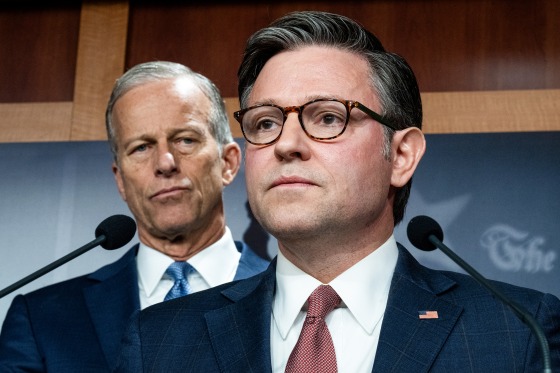
WASHINGTON — House and Senate Republican leaders jointly announced a plan Wednesday that they said would end the shutdown of the Department of Homeland Security that caused major airport delays.

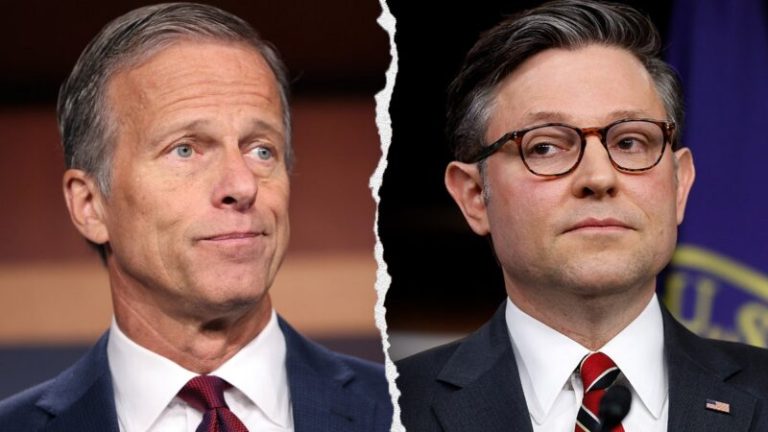
“In the coming days, Republicans in the Senate and House will be following through on the President’s directive by fully funding the entire Department of Homeland Security on two parallel tracks: through the appropriations process and through the reconciliation process,” House Speaker Mike Johnson, R-La., and Senate Majority Leader John Thune, R-S.D., said in a statement.

The two leaders were vague about the exact plan, but it appears to closely resemble the Senate’s preferred path from Friday.

Johnson and Thune heavily implied that it would be for the Senate to, once again, pass a bill it approved unanimously last week, which it could try to do as early as Thursday.

It would fund all of DHS except ICE and Customs and Border Protection, which Democrats won’t agree to fund without reforms to immigration enforcement operations. Those two agencies already have separate funding.

House Republican leaders trashed that bill and rejected it Friday, but they now appear ready to back down and accept the Senate plan. They would have to vote to pass it through the House.

GOP leadership had no immediate comment on the timing for a vote. Both chambers are scheduled to be on recess until April 13.

Then Republicans would fund ICE and CBP in a separate party-line “budget reconciliation” bill that could bypass a filibuster and get approved without any Democratic votes. The timing for that is even less clear.

Johnson and Thune said the “two-track” plan would “fully reopen the Department, make sure all federal workers are paid, and specifically fund immigration enforcement and border security for the next three years so that those law-enforcement activities can continue uninhibited.”

A White House official told NBC News that the administration supports the Johnson-Thune plan.

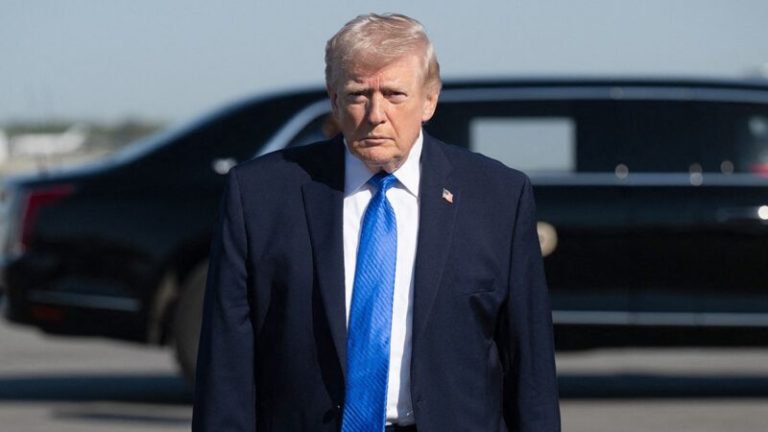
Earlier Wednesday, President Donald Trump called on Republicans to pass the party-line bill “no later than June 1st.” He threw the earlier plans to reopen DHS into chaos last week when he declined to comment on the Senate bill, which led House Republicans to reject it.

DHS has been shut down for more than a month, with employees for the TSA, FEMA and other agencies going for weeks without pay. Trump signed an executive order last week to pay TSA employees, but the legality and length of that plan are murky. Thousands of civilian Coast Guard employees and other DHS workers are still not being paid.

Senate Minority Leader Chuck Schumer, D-N.Y., slammed Republicans for having “derailed a bipartisan agreement” for days, “making American families pay the price for their dysfunction.”

“Throughout this fight, Senate Democrats never wavered. We were clear from the start: fund critical security, protect Americans, and no blank check for reckless ICE and Border Patrol enforcement,” he said Wednesday. “We were united, held the line, and refused to let Republican chaos win.”

On Friday, House Minority Leader Hakeem Jeffries, D-N.Y., said, “House Democrats are prepared to support the bill to end the Trump-Republican shutdown of the Department of Homeland Security, make sure TSA agents are paid, stand up for FEMA and for the Coast Guard, for our cyber security professionals, and stop inconveniencing Americans.”

The 48-day Department of Homeland Security shutdown is one step closer to ending after the Senate moved to fund most of the department Thursday morning.

The Senate agreed via voice vote to send a bipartisan deal funding the whole department except for President Donald Trump’s immigration enforcement and border security efforts to the House for consideration.

The chamber is not expected to vote on the legislation until House lawmakers return to Washington on April 13. 

The Senate vote follows GOP leaders endorsing a two-track approach to funding DHS on Wednesday, with President Trump giving lawmakers a hard deadline to end the record-breaking funding lapse. 

HOUSE CONSERVATIVES RAGE AGAINST SENATE DHS SHUTDOWN DEAL

The Senate bill accomplishes the first phase of the plan by working with Democrats to fund as much of DHS as possible on a bipartisan basis. However, it would zero out funding for ICE and much of the Border Patrol, save for $11 billion in customs funding going to the agency. Additionally, $10 billion teed up for ICE won’t be funded under the measure.

As for ICE and the Border Patrol, Republicans have said they will seek three full years of funding for both of these agencies in a party-line budget reconciliation package that will bypass Democrats’ opposition. Trump says he wants the forthcoming bill on his desk by June 1.

“We are going to work as fast, and as focused, as possible to replenish funding for our Border and ICE Agents, and the Radical Left Democrats won’t be able to stop us,” Trump wrote on Truth Social on Wednesday. 

The Senate bill’s passage on Thursday was a déjà vu moment for Senate Majority Leader John Thune, R-S.D., who helped steer the same measure through the upper chamber last week.

But House GOP leadership sharply rejected it, calling the measure’s exclusion of ICE and CBP money a “crap sandwich” and warning about the risks of funding those entities using the budget reconciliation process. The chamber then put forward a rival proposal that Senate Minority Leader Chuck Schumer, D-N.Y., made clear was “dead on arrival” in the Senate. 

Thune said shortly after the vote that he was hopeful the House would move onto the bill quickly, and that the next step would be budget reconciliation. Still, he blamed Senate Democrats, and not Republicans in-fighting at the finish line, for the current position Congress was in. 

“I think this whole where we are is just a regrettable place. We have the Democrats who are holding the appropriations process hostage and their anti-law enforcement, open borders, defund the police wing is the ascendant wing,” Thune said. “And there, I think everybody’s afraid of them, and so we’re stuck in a spot that’s just not good for the country, the future of the appropriations process, or, for that matter, the future of the Senate.” 

House Speaker Mike Johnson, R-La., appeared to relent Wednesday after Trump issued a statement outlining an end to the shutdown that appeared to side with Thune’s two-part approach to funding the department. 

GOP INFIGHTING, DEMOCRATS’ UNMET DEMANDS AND A CLEAR WINDFALL: WHO’S WINNING AND LOSING THE DHS SHUTDOWN

As the DHS shutdown drags on, Trump and congressional Republicans are gambling that budget reconciliation will be the way to fund immigration enforcement for several years to come. Some Republicans have floated funding ICE not just through Trump’s term, but for up to a decade.

The GOP used the same process to fund ICE last year, teeing up $75 billion for enforcement operations for the next four fiscal years.

But the party-line process comes with a host of challenges that could test Republican unity in an election year.

GOP lawmakers will have to identify spending cuts to pay for it. When Republicans used the process to pass Trump’s One Big Beautiful Bill Act in July 2025, lawmakers nearly stumbled at the finish line over disagreements on cuts to federal Medicaid spending and food assistance programs.

Without a looming deadline like the expiration of Trump’s 2017 tax cuts that Republicans extended in July 2025 through the “big, beautiful bill,” some GOP lawmakers have voiced concern that the party will stay unified.

Republicans have proposed adding other issues into the reconciliation mix, including supplemental funding for the Iran war, affordability measures, the president’s tariff regime and pieces of the election integrity-focused SAVE America Act.

The budget reconciliation process allows a party with control of the White House and both chambers of Congress to pass tax and spending priorities with a simple majority threshold, though the process is governed by stringent requirements for what is eligible to be included.

Punting ICE and CBP money to a future spending bill could also negatively affect support staff employed by both agencies who have not been paid during the seven-week shutdown.

Democrats have repeatedly blocked funding for ICE and the Border Patrol in the Senate since the beginning of the shutdown in mid-February. Though none of their proposals to reform immigration enforcement have been adopted, Democratic leaders claimed victory on Wednesday. 

“Throughout this fight, Senate Democrats never wavered,” Senate Minority Leader Chuck Schumer, D-N.Y., said Wednesday. “We were clear from the start: fund critical security, protect Americans, and no blank check for reckless ICE and Border Patrol enforcement. 

“We were united, held the line, and refused to let Republican chaos win.”

The Senate deal funding most of DHS could still face roadblocks in the House. A handful of conservatives have already said they will vote “no” while using the same messaging employed by House GOP leadership to oppose the bill last week.

“Let’s make this simple: caving to Democrats and not paying CBP and ICE is agreeing to defund Law Enforcement and leaving our borders wide open again,” Rep. Scott Perry, R-Pa., wrote on social media Wednesday. “If that’s the vote, I’m a NO.”

American flyers still smarting from interminable airport security lines are about to get another shock.

A looming global jet fuel shortage is expected to hike the cost of air travel and reduce flight schedules, as airlines look to offset rising prices.

On Monday, JetBlue announced it was raising baggage fees, citing “rising operating costs.”

“While we recognize that fee increases are never ideal, we take careful consideration to ensure these changes are implemented only when necessary,” the carrier said.

United Airlines CEO Scott Kirby said costs to passengers have already been increasing. Data from flight information group OAG shows average airfares in the past week reached $465, the highest price point for the same period since at least 2019.

“We have to raise prices to deal with higher fuel prices,” Kirby acknowledged at a company event last week in Los Angeles. In a subsequent memo, he added: “It may be a challenge to continue passing through much of the increased fuel price if oil stays higher for longer.”

The rising prices are the latest example of the economic fallout from the war with Iran. Analysts have started warning that the full toll has only begun to be accounted for as the global economy absorbs the loss of critical energy exports out of the region due to the closure of the Strait of Hormuz and damage to other key energy infrastructure sites in the region. On Tuesday, U.S. gasoline prices hit $4 a gallon for the first time since 2022 amid surging oil prices. Major stock indexes, meanwhile, have fallen by nearly 10% since the start of the war.

In the case of air travel, the industry is facing jet fuel prices that have surged 85% in the U.S. since the day before the war began in February, according to data from Argus published by the industry group Airlines for America. On Monday, they hit a record $4.62 a gallon.

Most U.S. carriers no longer hedge fuel costs, said Henry Harteveldt, president of Atmosphere Research Group. So they are forced to pass on some costs to passengers.

While U.S. carriers largely source jet fuel domestically, countries in Asia and Europe that are more reliant on Middle East stocks have begun signaling they are taking unprecedented measures to conserve jet fuel. In South Korea, carriers have requested that the government help redirect fuel stocks bound for export back to local markets.

The Financial Times reported Monday that the U.K. was also facing an acute shortage, with no Britain-bound cargoes visible on the water as transit through the Strait of Hormuz remains blocked. Some foreign carriers have begun charging fuel surcharges of as much as $150.

As overseas carriers begin looking to alternative supply bases, the cost for a global commodity like jet fuel rises across the board.

“It shocks the entire mechanism,” said Jaime Brito, an executive director at Oil Price Information Service consultancy.

President Donald Trump commented on the jet fuel shortages Tuesday morning, though he did not mention their impact on U.S. travelers.

“All of those countries that can’t get jet fuel because of the Strait of Hormuz, like the United Kingdom, which refused to get involved in the decapitation of Iran, I have a suggestion for you: Number 1, buy from the U.S., we have plenty, and Number 2, build up some delayed courage, go to the Strait, and just TAKE IT,” he wrote on Truth Social.

Airlines are also signaling capacity cuts to cope with rising costs. United will drop about 5% of planned flights in mostly “off-peak periods” — like red-eye and midweek routes — during the second and third quarters of 2026 to further mitigate the cost increases.

“We’re certainly going to be nimble in terms of capacity to make sure that supply and demand stay in balance,” American Airlines CEO Robert Isom said at a JPMorgan conference earlier this month.

Kyle Potter, executive editor of the Thrifty Traveler, said most carriers have quietly been raising airfares since the Iran war began. He said airlines typically move in droves when making pricing decisions, so it is likely that other carriers may also soon begin raising baggage fees or seek other forms of ancillary revenue. Potter noted that unlike airfares, revenues from these fees are not subject to federal excise taxes.

As a result, the fees — unlike airfares — are unlikely to come back down assuming jet fuel prices recover.

Representatives for five other major U.S. carriers did not respond to a request for comment.

The acute fuel price increase comes as air travel demand has remained steady, with January and February ticket sales at or near records. While investors have taken airline stocks down some 25% since the start of the Iran war, Kirby said that customers appear willing to keep booking thanks to healthy demand even if airfare rises.

“The number of wealthy Americans who are traveling is bigger and wealthier than ever, and that is what much of the airline industry is relying on right now,” Potter said. “And that means they’re more immune to higher fees, higher fares and just getting turned off by negative news about travel.”

President Donald Trump said he is strongly considering pulling the United States out of NATO over the alliance’s refusal to join his administration’s efforts in the Iran conflict, according to a report.

“I was never swayed by NATO,” Trump told The Daily Telegraph in an interview published Wednesday.

The president, long a critic of the military alliance, which has been pivotal in maintaining global order since World War II, said reconsidering the matter was “beyond consideration.”

“I always knew they were a paper tiger, and Putin knows that too, by the way,” Trump told the British outlet.

MORE KEY US ALLIES BLOCK MILITARY FLIGHTS AS IRAN WAR RIFT WIDENS WITH TRUMP

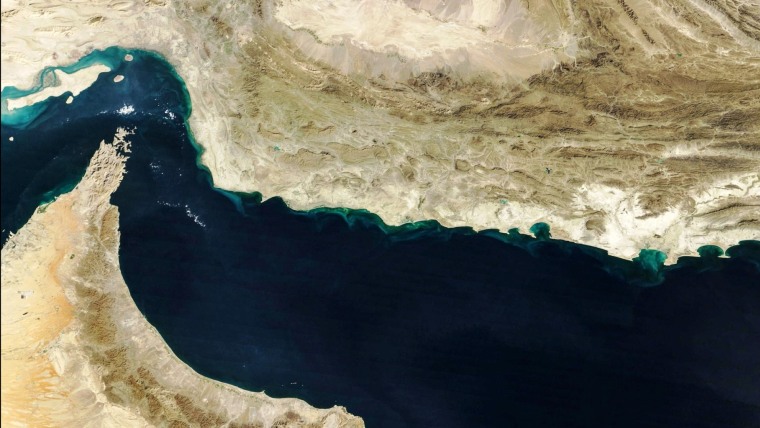
The comments come after European nations reportedly rejected Trump’s request that allies send warships to reopen the Strait of Hormuz, through which roughly 20% of the world’s oil supply travels. Iran has threatened or moved to restrict access to the strait in reaction to the U.S. offensive against Iranian targets, raising concerns about global energy markets and economic stability.

“Beyond not being there, it was actually hard to believe. And I didn’t do a big sale. I just said, ‘Hey,’ you know, I didn’t insist too much. I just think it should be automatic,” Trump said.

“We’ve been there automatically, including Ukraine. Ukraine wasn’t our problem. It was a test, and we were there for them, and we would always have been there for them. They weren’t there for us.”

TRUMP WARNS NATO OF ‘VERY BAD’ FUTURE IF ALLIES DON’T HELP SECURE STRAIT OF HORMUZ

The president also criticized the United Kingdom and Prime Minister Keir Starmer for not participating in the conflict.

“You don’t even have a navy. You’re too old and had aircraft carriers that didn’t work,” Trump said.

Responding to the president’s comments, Starmer said Britain is “fully committed to NATO,” calling it “the single most effective military alliance the world has ever seen.”

Starmer told reporters that “whatever the pressure on me and others, whatever the noise, I am going to act in the British national interest in all the decisions I make.”

The Associated Press contributed to this report.

President Donald Trump said Sunday that he would like to “take the oil in Iran” and is considering seizing the export hub of Kharg Island, which is responsible for more than 90% of Iran’s oil exports.

In an interview with the Financial Times, Trump said his “preference would be to take the oil.”

“To be honest with you, my favorite thing is to take the oil in Iran but some stupid people back in the U.S. say: ‘Why are you doing that?’ But they’re stupid people,” he said.

The interview marks some of Trump’s most direct comments about his thinking on what to do with Iran’s oil.

In an interview with NBC News this month, Trump sidestepped answering whether he had plans to try to take Iran’s oil.

“You look at Venezuela,” he said. “People have thought about it, but it’s too soon to talk about that.”

In January, the U.S. captured Venezuelan leader Nicolás Maduro and proceeded to take more control over the country’s oil industry.

The White House did not immediately respond to a request for comment Sunday night.

Trump told the Financial Times on Sunday that the U.S. has “a lot of options,” including potentially taking Kharg Island, a rare island made of hard coral off Iran.

“Maybe we take Kharg Island, maybe we don’t. We have a lot of options,” Trump said. “It would also mean we had to be there [in Kharg Island] for a while.”

Oil prices have skyrocketed around the globe as the war continues, with U.S. crude oil costing over $100 a barrel Sunday.

Thousands more U.S. troops are heading to the Middle East, with the USS Tripoli arriving on Saturday as part of a complement of 3,500 troops. But Trump and his administration continue to signal that they are working to negotiate a 15-point proposal to end the war.

Trump declined Sunday to offer specific details about whether a ceasefire deal could be reached in the coming days to reopen the Strait of Hormuz, a critical waterway used to move about 20% of the world’s oil exports.

“We’ve got about 3,000 targets left — we’ve bombed 13,000 targets — and another couple of thousand targets to go,” Trump said in the Financial Times interview. “A deal could be made fairly quickly.”