
Archive

April 2026

Browsing

Shelly Kittleson, the American journalist who was kidnapped last week in Iraq, has been released, according to Al-Monitor, the Middle East publication where she works as a freelance contributor. 

Viral surveillance footage appeared to show Kittleson being forced into a car by two men at a busy intersection in Baghdad last Tuesday. The State Department previously said an individual with ties to the Iranian-aligned militia group Kataib Hizballah was believed to be involved in Kittleson’s capture. 

Kataib Hizballah issued a statement that Kittleson was set free in “appreciation of the patriotic positions” of Iraq’s prime minister, Mohammed Shia al-Sudani, who pushed for her release. The group said she would be set free “on the condition that she leaves the country immediately,” according to Al-Monitor.

AMERICAN JOURNALIST KIDNAPPED IN IRAQ, EMPLOYER SAYS

“This initiative will not be repeated in the future… we are in a state of war waged by the Zionist-American enemy against Islam and in such situations many considerations are disregarded,” Kataib Hizballah security commander Abu Mujahid Al-Asaf added, according to The New York Times. 

A U.S. official confirmed her release to Fox News. 

“There were U.S. efforts behind the scenes, I am told, to secure her release from Kataib Hezbollah,” Fox News chief foreign correspondent Trey Yingst reported. 

Former Pentagon official Alex Plitsas, a friend of the journalist who has called himself her designated U.S. point of contact, posted on X that he isn’t ready to celebrate.

“We are still awaiting Shelley to be transferred to US officials. We welcome the news of her pending release but will save celebratory statements until she is transferred…. we will have more to say when she is in US hands,” Plitsas wrote. 

The State Department did not immediately respond to a request for comment by Fox News Digital.

The 49-year-old freelance journalist, an American citizen and Wisconsin native based in Rome, reported from war zones for years, spending time in Afghanistan and Syria before Iraq. She “often worked without formal assignments from editors and on a shoestring budget, taking shared taxis to lawless corners of Iraq where militia rule outweighs government control,” the Associated Press reported after speaking to her friends, family and colleagues. 

REPORTER KIDNAPPED IN BAGHDAD KNOWN FOR PURSUING GUTSY, LOW-BUDGET ASSIGNMENTS WHILE LIVING ‘FRUGAL EXISTENCE’

Recent headlines published by Kittleson include, “On eve of Iran’s Pezeshkian visit, Iraq jostles for Shiite space amid rivalries,” “Iraqis protest proposed ‘anti-women’ amendment to personal status law” and “Honor killings in Iraq rekindle efforts to criminalize domestic violence.”

“Hope she can return to do her job and tell the story of many who are not heard in region,” Al-Monitor top editor Joyce Karam posted when reporting her release. 

The Associated Press, citing “an Iraqi official with direct knowledge of the situation,” reported that she was freed in exchange for “several members” of Kataib Hezbollah that had previously been detained by Iraqi authorities.

US STRIKES AGAINST IRAN-BACKED MILITIAS IN IRAQ REPORTEDLY CONTINUE AS BAGHDAD WARNS OF ‘RIGHT TO RESPOND’

Reporters Without Borders released the following statement: “We are overjoyed by reports that Shelly Kittleson has been released by her captors in Iraq. Shelly’s abduction underscored the very serious risks facing even the best-trained and experienced journalists. RSF is deeply grateful to all the parties involved from the American and Iraqi governments who were able to secure this positive outcome. RSF, the Committee to Protect Journalists, and the Foley Foundation wrote to Secretary of State Marco Rubio on April 3, urging him to do everything in his power to bring Shelly home. We are now waiting for reassurance that she is all right and that she will be able to reunite with her loved ones soon.”

Before she was abducted, Kittleson told friends that U.S. officials had told her a militia group intended to target her, but she didn’t believe the threat was credible. 

This is a developing story, more to come… 

The Associated Press and Fox News chief foreign correspondent Trey Yingst  contributed to this report. 

Americans are getting smaller pay raises while tariffs and higher gas prices are threatening to make everything more expensive.

Translation: The affordability problem isn’t improving.

New government data released Friday showed non-supervisory workers getting a 3.4% pay raise on average hourly earnings over the last year. That’s the slowest pace of wage gains since 2021, and a downshift from the last two years, when pay bumps were closer to 4%.

The slowdown comes as economists worry about rising inflation, with the Iran war choking off oil tankers and pushing gas prices up over $1 per gallon in just a month, to a national average of $4.09 on Friday.

As diesel costs break $5.50 a gallon (compared to just $3.89 a month ago), retailers and grocers are now contending with higher transportation costs. Amazon said Thursday it will begin charging sellers a 3.5% “fuel and logistics-related surcharge” beginning on April 17.

Airlines like United and JetBlue are raising bag fees in an effort to offset sky-high jet fuel costs. The International Air Transport Association says the price of jet fuel is up 104% in the past month.

“With the recent uptick in inflation driven by energy prices, real wage growth is likely to decelerate further, putting increased pressure on consumers,” said Thrivent’s chief financial and investment officer, David Royal.

For now, Americans are still seeing their earnings rise at a faster pace than the increase in price tags at the store. As pay rose by 3.4%, the most recent inflation data showed prices rising by 2.4% year-over-year.

Wage gains for non-supervisory employees — a category that includes roughly four out of every five non-farm workers — have been outpacing price increases since March 2023, when post-pandemic inflation finally began to cool.

But the concern is that the story could change soon. Because of the bump from oil prices, Navy Federal Credit Union Chief Economist Heather Long said it’s possible inflation could pace at 4% this month.

“Four percent is above that 3.5 percent annual wage gain, and that’s where you see a lot of squeeze on workers, particularly middle-class and moderate-income workers,” Long said.

Warning signs are flashing that slowing wage growth could ripple beyond the gas station and prices at the grocery store. Higher mortgage rates now have some worried about icing out even more potential homebuyers.

The average 30-year fixed mortgage rate rose from 5.99% at the start of the war to 6.45% on April 3, according to Mortgage News Daily. The rise is due in part to concerns that the Federal Reserve will have to raise interest rates to tamp down on war-driven inflation.

“With choppy job growth, weaker labor-force attachment and rising uncertainty, many households — especially renters and first-time buyers — could become more cautious as weaker inflation-adjusted wages erode recent affordability improvements,” said Zillow senior economist Orphe Divounguy.

If wages can’t keep up with rising costs across the board, it’s likely that affordability will become a larger issue than it already was prior to the war. An NBC News poll conducted during the first week of the war with Iran found that, for a plurality of respondents, inflation and the cost of living was the most important issue facing the country.

Economists feel the same way.

Responding to a question from NBC News at a March 18 news conference, Federal Reserve Chair Jerome Powell noted that “real” wage gains — a measure of wages adjusted for inflation — need to be positive in order for Americans to feel better about affordability.

“it will take some years of positive real earning gains for people to feel good again, we think. But you’re right — when you talk to people, they do feel squeezed,” Powell said.

President Donald Trump touted the “historic” rescue of the downed F-15E airmen behind enemy lines and issued a warning to Iran to make a deal before Tuesday night’s 8 p.m. ET deadline or face being “taken out.”

“This is a rescue that’s very historic,” Trump told the White House press corps in a Monday news conference. “It’ll go down to the books.”

“Late Thursday night, an American F-15 fighter jet went down deep inside enemy territory in Iran while participating in Operation Epic Fury, where we’re doing unbelievably well. Well, at a level that nobody’s ever seen before.”

Trump quickly paused his hailing of the rescue to add a warning for Iran to come to peace.

TRUMP REVEALS IRAN MADE ‘SIGNIFICANT PROPOSAL’ AFTER ULTIMATUM, BUT ‘NOT GOOD ENOUGH’

“The entire country can be taken out in one night, and that night might be tomorrow night,” Trump said.

Trump continued to press Iran to come to a peace deal, hours after saying the offers thus far are “not enough,” and War Secretary Pete Hegseth vowed the heaviest bombing of Iran to date.

TRUMP SAYS IRAN ‘NO LONGER A THREAT’ AFTER 32 DAYS — OUTLINES NEXT PHASE OF US WAR

“By the way, per the president’s direction, [Monday] will be the largest volume of strikes since day one of this operation,” Hegseth vowed, taking the mic just before Chair of the Joint Chiefs of Staff Gen. Dan “Raizin’” Caine. 

“Tomorrow, even more than today. And then Iran has a choice,” Hegseth added. “Choose wisely, because this president does not play around. You can ask Soleimani, you can ask Maduro. You can ask Khamenei.”

Trump, responding to a question from Fox News, noted there were military leaders warning against the dangerous exfiltration of the two airmen, citing the risks to a multitude of troops.

“There were military people, very professional, that preferred not doing it: These two were totally on board, which was very important,” Trump said, noting Hegseth and Gen. Caine. 

IDF CONFIRMS IRGC INTEL CHIEF KILLED; QUDS FORCE COMMANDER ALSO ELIMINATED IN STRIKE

“But, no, there were military people that said, ‘You just don’t do this; you don’t go into the heart of a very powerful military.”

Trump noted that “half the people are wearing uniforms” in Iran, exacerbating the challenges of extracting the American airmen.

“I was surprised somebody said it’s the only time it’s ever been done,” Trump continued. “I said, that’s not possible, but it is possible because you’re going into hundreds of thousands of soldiers along the path. I mean, look at some of the helicopters, how they got hit.”

Trump, in a moment that went from serious to lighter, asked Caine “how many” people conducted the rescue.

INSIDE THE DARING RESCUE OF AIRMAN BEHIND ENEMY LINES: HOW CIA ASSISTED WITH ‘DECEPTION CAMPAIGN’

“I’d love to keep that a secret,” Caine shot back.

“I’ll keep it a secret, but it was hundreds and hundreds of these people,” Trump said. 

“Hundreds of people went into this journey. Hundreds of people could have been killed. Forget about the equipment. A lot of equipment. Nobody cares of it. Hundreds of people could have been killed,” Trump added.

“So we had people that were within the military that said, ‘This is not a wise move,’” Trump said.

“And I understood that, but I decided to do it.”

Savannah Guthrie returned to the “TODAY” anchor desk Monday, more than two months after her mother disappeared.

“We are so glad you started your week with us, and it is good to be home,” Guthrie said at the start of the show. She wore a bright yellow dress, echoing the yellow ribbons and flowers left at her mother’s home.

“TODAY” co-anchor Craig Melvin, wearing a yellow tie, patted Guthrie’s hand and replied: “Yes, it is good to have you at home.”

The two anchors then turned to the morning’s top headlines, including an opening segment about the U.S.-Israeli war with Iran. “Well, here we go, ready or not,” Guthrie said. “Let’s do the news.”

Savannah Guthrie on Monday’s “TODAY.”TODAY

Guthrie, who has co-anchored “TODAY” since 2012, stepped away from her role in early February after Nancy Guthrie, 84, went missing from her home near Tucson, Arizona. Authorities have described the case as a possible kidnapping or abduction.

Guthrie told Hoda Kotb last month that she believed returning to the “TODAY” anchor desk is “part of my purpose right now,” even though it was difficult to imagine going back to a workplace she associates with “joy and lightness.”

“I can’t come back and try to be something that I’m not. But I can’t not come back because it’s my family,” Guthrie said in the interview, her first since the start of the ordeal. “I don’t know if I can do it. I don’t know if I’ll belong anymore, but I would like to try.”

Savannah Guthrie greets fans Monday in Rockefeller Plaza.TODAY

In the second hour of Monday’s show, Guthrie greeted “TODAY” fans gathered outside on Rockefeller Plaza, some wearing yellow pins and holding signs with her mother’s photo. Guthrie fought back tears as she held co-host Jenna Bush Hager’s hand and thanked her supporters for their prayers and letters.

“You guys have been so beautiful,” she said. “I’ve received so many letters, so much kindness to me and my whole family. We feel it. We feel your prayers.”

Savannah Guthrie walks with Jenna Bush Hager outside the “TODAY” studios.TODAY

Nancy Guthrie’s family reported her missing around noon Feb. 1 after she did not show up at a friend’s house for virtual church services, according to the Pima County Sheriff’s Office. She was last seen the previous night around 9:45 p.m. after having dinner at her daughter Annie Guthrie’s home, according to authorities.

The investigation into her disappearance gripped the nation and put an intense spotlight on the quiet Catalina Foothills area of Tucson. Authorities have not identified a suspect or motive, though the FBI released chilling doorbell camera video of an armed and masked man outside Nancy Guthrie’s home on the morning she was reported missing.

The bureau described him as a man of average build, 5 feet, 9 inches to 5 feet, 10 inches tall, wearing a black Ozark Trail Hiker Pack 25-liter backpack.

Guthrie and her siblings, Camron Guthrie and Annie Guthrie, have provided updates on the case via social media. In emotionally wrenching videos on Instagram, they have thanked members of the public for their prayers and made direct appeals to Nancy Guthrie’s possible abductor.

“Someone knows how to find our mom and bring her home,” Guthrie wrote in the caption to a Feb. 24 video post.

The family is offering up to $1 million for information that leads to the 84-year-old’s recovery. The FBI is offering a reward of up to $100,000 for “information leading to the recovery of Nancy Guthrie and/or the arrest and conviction of anyone involved in her disappearance.”

Kotb, a “TODAY” contributor, substituted for Guthrie. In that period, Guthrie withdrew from NBC’s coverage of the Milan Cortina Winter Olympics; Mary Carillo stepped in to co-host the opening ceremony alongside NBC Sports’ Terry Gannon.

Guthrie visited the “TODAY” set March 5. In photos taken from outside the studio by a photographer for The Associated Press, Guthrie could be seen wiping tears and embracing her colleagues. The visit was not televised.

Savannah Guthrie hugs Al Roker during a visit to “TODAY” on March 5.Charles Sykes / Invision / AP

“I really wanted to come and see everybody. I just love this beautiful place that we call home, where we get to come and be every day,” Guthrie told Kotb, adding: “When times are hard, you want to be with your family.”

The White House on Friday requested $152 million to begin reopening Alcatraz as an operational prison.

The funding proposal, included in the Trump administration’s fiscal year 2027 budget request, would cover the initial phase of rebuilding the long-closed facility into what officials describe as a “state-of-the-art secure prison facility.”

Congress will ultimately decide whether to approve the funding.

NEW ICE DETENTION FACILITY ‘LOUISIANA LOCKUP’ OPENS AT NOTORIOUS PRISON

President Donald Trump first pushed the idea last year, directing the Bureau of Prisons, the Department of Justice and other federal agencies to reopen and expand Alcatraz to detain what he called America’s “most ruthless and violent offenders.”

“REBUILD, AND OPEN ALCATRAZ!” the president said in a Truth Social post last May. “For too long, America has been plagued by vicious, violent, and repeat Criminal Offenders, the dregs of society, who will never contribute anything other than Misery and Suffering.

Located in San Francisco Bay, Alcatraz has been closed since 1963 and currently operates as a popular tourist destination under the National Park Service.

Former House Speaker Nancy Pelosi, D-Calif., slammed the proposal in a post on X on Friday.

TRUMP 2027 BUDGET PREVIEW HINTS AT SWEEPING SCALE-UP IN CORE AGENDA

“Rebuilding Alcatraz into a modern prison is a stupid notion that would be nothing more than a waste of taxpayer dollars and an insult to the intelligence of the American people,” Pelosi wrote. “Alcatraz is a historic museum that belongs to the public, and San Franciscans will not stand for Washington turning one of our most iconic landmarks into a political prop.”

Originally opened as a federal prison in 1934, Alcatraz was widely considered one of the most secure facilities in the country.

The prison once housed notorious criminals including mob boss Al Capone.

EXCLUSIVE: TRUMP ADMINISTRATION EYES ALCATRAZ REOPENING TO HOUSE NATION’S ‘WORST OF THE WORST’

Alcatraz first served as a military prison in the 1850s. At its peak, the facility held more than 300 inmates, along with staff and their families.

Despite its reputation, Alcatraz was ultimately shut down because of high operating costs.

According to the Bureau of Prisons, it was nearly three times more expensive to run than other federal prisons at the time.

The White House and the Bureau of Prisons did not immediately respond to Fox News Digital’s request for comment.

FIRST ON FOX: The State Department has added business formal dress code guidance to its internal policy manual for the first time, establishing department-wide standards for employee attire.

The changes, implemented in recent days in the Foreign Affairs Manual — the department’s central repository for policies — mark the first time the agency has formally codified expectations for how diplomats and staff should dress in official settings.

“Representing the United States of America is an honor — and this new policy ensures our diplomats project credibility, respect, and the dignity of the nation we serve,” Assistant Secretary Dylan Johnson told Fox News Digital.

The updated policy applies broadly across the department for both civil service and foreign service employees.

DEPARTMENT TO ASK FOR BONDS OF UP TO $15,000 FOR VISA APPLICATIONS FROM A DOZEN MORE COUNTRIES

The move underscores a broader recalibration at the State Department, where Trump administration officials have sought to impose clearer standards around discipline, appearance and adherence to policy. 

A State Department official said the change was driven in part by concerns that some diplomats had been dressing “pretty informally” in recent years. 

“This should have happened a long time ago,” the official said. 

The formal dress code represents a shift away from Biden-era personnel policies that prioritized flexibility and cultural inclusivity, toward a more uniform and prescriptive standard for how U.S. diplomats present themselves.

“Appropriate attire and appearance will depend on the duties performed, the work environment, and the level of interaction with foreign interlocutors and other external stakeholders,” reads the manual, viewed by Fox News Digital. “For staff participating in meetings or other official engagements with foreign interlocutors, dress is Business Formal and personal appearance is polished and professional unless otherwise specified.”

The dress code update follows other recent changes to how the State Department evaluates and manages its workforce, including revisions to hiring and promotion criteria for Foreign Service officers. 

Earlier in 2026, the department replaced diversity, equity and inclusion-related benchmarks with a new core precept focused on “fidelity,” emphasizing adherence to U.S. government policy and chain-of-command authority.

Under the updated guidance, mid- and senior-level diplomats are expected to demonstrate loyalty by “zealously executing U.S. government policy” and resolving ambiguity in favor of leadership direction, according to internal documents previously reported by Fox News Digital.

Those changes came alongside broader efforts to restructure the department’s workforce, including plans to reduce staffing and consolidate offices, signaling a shift toward more standardized expectations for diplomatic personnel. The addition of a formal dress code marks the latest step in that direction.

A week after President Donald Trump urged Sydney Gruters to run for an open GOP-held congressional seat in Florida, the former executive director of the state’s New College Foundation and wife of Republican National Committee (RNC) Chair Joe Gruters declared her candidacy.

“As a working mother of three, I see firsthand how much pressure rising prices are putting on families across Southwest Florida,” Sydney Gruters said as she launched her campaign on Thursday. “From groceries and gas to housing and insurance, too many families, seniors and veterans are being stretched thin. I’m running for Congress to protect our conservative values and fight for the people of this district and give them a strong voice in Washington.”

With Trump’s support, Gruters is considered the clear frontrunner to succeed retiring longtime GOP Rep. Vern Buchanan, her former boss, in Florida’s right-leaning 16th Congressional District, which stretches from Tampa’s eastern suburbs south to Bradenton. Republicans currently control the House 218-214 and will be defending their fragile majority in this year’s midterm elections.

Trump, in a social media post on March 24, emphasized that Gruters would “fight tirelessly.”

RNC CHAIR BETS ON ‘SECRET WEAPON’ TO DEFY MIDTERM HISTORY, PROTECT GOP MAJORITIES

“Should she decide to enter this Race, Sydney Gruters has my Complete and Total Endorsement. RUN, SYDNEY, RUN!” the president declared.

While her husband, a Florida state senator and top Trump supporter in the Sunshine State, is well known nationally as he steers the RNC, the 44-year-old Sydney Gruters is well known in her district and very familiar with Congress.

SCOOP: HOUSE GOP CAMPAIGN ARM LAUNCHES ‘MAGA MAJORITY’ PROGRAM TO BOOST TRUMP-ALIGNED CANDIDATES

Gruters served as Buchanan’s operation director for a decade (2007-2017) and later as district director to GOP Rep. Greg Steube (2019-2023) in the neighboring 17th Congressional District.

In-between her two congressional stints, she served in Trump’s first administration as state director for Florida and the U.S. Virgin Islands in the Department of Agriculture.

Prior to launching her congressional campaign, Gruters finished up her tenure as vice president of advancement and executive director of the New College Foundation.

Gruters took her position at the smaller liberal arts state college in Sarasota soon after Republican Gov. Ron DeSantis installed a conservative board of trustees at the school. The one-time progressive-minded college subsequently created a classical education curriculum, which emphasizes liberal arts and Western teachings. Last autumn, the college was among the first to sign on to Trump’s education compact, which offers schools federal funding for backing his education priorities.

As she launches her congressional bid, Gruters is also backed by Maggie’s List, a political group that works to elect conservative women to Congress.

Three other Republicans, as well as three Democrats, are also running to succeed Buchanan.

Joe Gruters, in a statement to Fox News Digital, said he’s “incredibly proud of Sydney as she launches her campaign, and it’s an honor to see her earn President Trump’s support. As always, the RNC remains neutral in Republican primaries, so any support I offer will be purely in my personal capacity.”

Trump won 57% of the vote in the district in his 2024 presidential election victory. And Buchanan grabbed nearly 60% of the vote as he won re-election. But the seat may be refigured ahead of this year’s midterms, as the GOP-dominated Florida legislature meets in a special session later this month to deal with congressional redistricting in the red-leaning state.

WASHINGTON — House and Senate Republican leaders jointly announced a plan Wednesday that they said would end the shutdown of the Department of Homeland Security that caused major airport delays.

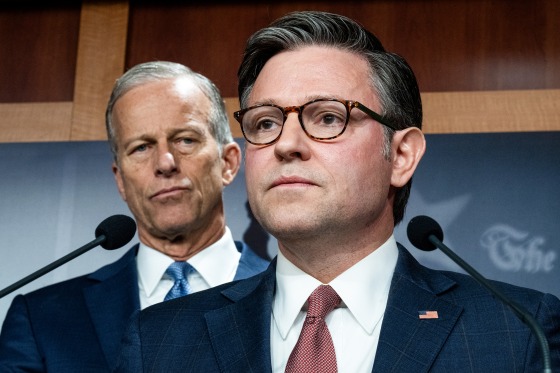
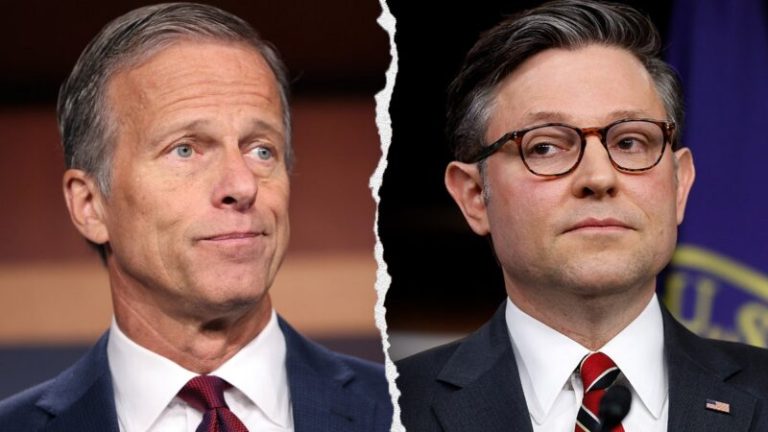
“In the coming days, Republicans in the Senate and House will be following through on the President’s directive by fully funding the entire Department of Homeland Security on two parallel tracks: through the appropriations process and through the reconciliation process,” House Speaker Mike Johnson, R-La., and Senate Majority Leader John Thune, R-S.D., said in a statement.

The two leaders were vague about the exact plan, but it appears to closely resemble the Senate’s preferred path from Friday.

Johnson and Thune heavily implied that it would be for the Senate to, once again, pass a bill it approved unanimously last week, which it could try to do as early as Thursday.

It would fund all of DHS except ICE and Customs and Border Protection, which Democrats won’t agree to fund without reforms to immigration enforcement operations. Those two agencies already have separate funding.

House Republican leaders trashed that bill and rejected it Friday, but they now appear ready to back down and accept the Senate plan. They would have to vote to pass it through the House.

GOP leadership had no immediate comment on the timing for a vote. Both chambers are scheduled to be on recess until April 13.

Then Republicans would fund ICE and CBP in a separate party-line “budget reconciliation” bill that could bypass a filibuster and get approved without any Democratic votes. The timing for that is even less clear.

Johnson and Thune said the “two-track” plan would “fully reopen the Department, make sure all federal workers are paid, and specifically fund immigration enforcement and border security for the next three years so that those law-enforcement activities can continue uninhibited.”

A White House official told NBC News that the administration supports the Johnson-Thune plan.

Earlier Wednesday, President Donald Trump called on Republicans to pass the party-line bill “no later than June 1st.” He threw the earlier plans to reopen DHS into chaos last week when he declined to comment on the Senate bill, which led House Republicans to reject it.

DHS has been shut down for more than a month, with employees for the TSA, FEMA and other agencies going for weeks without pay. Trump signed an executive order last week to pay TSA employees, but the legality and length of that plan are murky. Thousands of civilian Coast Guard employees and other DHS workers are still not being paid.

Senate Minority Leader Chuck Schumer, D-N.Y., slammed Republicans for having “derailed a bipartisan agreement” for days, “making American families pay the price for their dysfunction.”

“Throughout this fight, Senate Democrats never wavered. We were clear from the start: fund critical security, protect Americans, and no blank check for reckless ICE and Border Patrol enforcement,” he said Wednesday. “We were united, held the line, and refused to let Republican chaos win.”

On Friday, House Minority Leader Hakeem Jeffries, D-N.Y., said, “House Democrats are prepared to support the bill to end the Trump-Republican shutdown of the Department of Homeland Security, make sure TSA agents are paid, stand up for FEMA and for the Coast Guard, for our cyber security professionals, and stop inconveniencing Americans.”

The 48-day Department of Homeland Security shutdown is one step closer to ending after the Senate moved to fund most of the department Thursday morning.

The Senate agreed via voice vote to send a bipartisan deal funding the whole department except for President Donald Trump’s immigration enforcement and border security efforts to the House for consideration.

The chamber is not expected to vote on the legislation until House lawmakers return to Washington on April 13. 

The Senate vote follows GOP leaders endorsing a two-track approach to funding DHS on Wednesday, with President Trump giving lawmakers a hard deadline to end the record-breaking funding lapse. 

HOUSE CONSERVATIVES RAGE AGAINST SENATE DHS SHUTDOWN DEAL

The Senate bill accomplishes the first phase of the plan by working with Democrats to fund as much of DHS as possible on a bipartisan basis. However, it would zero out funding for ICE and much of the Border Patrol, save for $11 billion in customs funding going to the agency. Additionally, $10 billion teed up for ICE won’t be funded under the measure.

As for ICE and the Border Patrol, Republicans have said they will seek three full years of funding for both of these agencies in a party-line budget reconciliation package that will bypass Democrats’ opposition. Trump says he wants the forthcoming bill on his desk by June 1.

“We are going to work as fast, and as focused, as possible to replenish funding for our Border and ICE Agents, and the Radical Left Democrats won’t be able to stop us,” Trump wrote on Truth Social on Wednesday. 

The Senate bill’s passage on Thursday was a déjà vu moment for Senate Majority Leader John Thune, R-S.D., who helped steer the same measure through the upper chamber last week.

But House GOP leadership sharply rejected it, calling the measure’s exclusion of ICE and CBP money a “crap sandwich” and warning about the risks of funding those entities using the budget reconciliation process. The chamber then put forward a rival proposal that Senate Minority Leader Chuck Schumer, D-N.Y., made clear was “dead on arrival” in the Senate. 

Thune said shortly after the vote that he was hopeful the House would move onto the bill quickly, and that the next step would be budget reconciliation. Still, he blamed Senate Democrats, and not Republicans in-fighting at the finish line, for the current position Congress was in. 

“I think this whole where we are is just a regrettable place. We have the Democrats who are holding the appropriations process hostage and their anti-law enforcement, open borders, defund the police wing is the ascendant wing,” Thune said. “And there, I think everybody’s afraid of them, and so we’re stuck in a spot that’s just not good for the country, the future of the appropriations process, or, for that matter, the future of the Senate.” 

House Speaker Mike Johnson, R-La., appeared to relent Wednesday after Trump issued a statement outlining an end to the shutdown that appeared to side with Thune’s two-part approach to funding the department. 

GOP INFIGHTING, DEMOCRATS’ UNMET DEMANDS AND A CLEAR WINDFALL: WHO’S WINNING AND LOSING THE DHS SHUTDOWN

As the DHS shutdown drags on, Trump and congressional Republicans are gambling that budget reconciliation will be the way to fund immigration enforcement for several years to come. Some Republicans have floated funding ICE not just through Trump’s term, but for up to a decade.

The GOP used the same process to fund ICE last year, teeing up $75 billion for enforcement operations for the next four fiscal years.

But the party-line process comes with a host of challenges that could test Republican unity in an election year.

GOP lawmakers will have to identify spending cuts to pay for it. When Republicans used the process to pass Trump’s One Big Beautiful Bill Act in July 2025, lawmakers nearly stumbled at the finish line over disagreements on cuts to federal Medicaid spending and food assistance programs.

Without a looming deadline like the expiration of Trump’s 2017 tax cuts that Republicans extended in July 2025 through the “big, beautiful bill,” some GOP lawmakers have voiced concern that the party will stay unified.

Republicans have proposed adding other issues into the reconciliation mix, including supplemental funding for the Iran war, affordability measures, the president’s tariff regime and pieces of the election integrity-focused SAVE America Act.

The budget reconciliation process allows a party with control of the White House and both chambers of Congress to pass tax and spending priorities with a simple majority threshold, though the process is governed by stringent requirements for what is eligible to be included.

Punting ICE and CBP money to a future spending bill could also negatively affect support staff employed by both agencies who have not been paid during the seven-week shutdown.

Democrats have repeatedly blocked funding for ICE and the Border Patrol in the Senate since the beginning of the shutdown in mid-February. Though none of their proposals to reform immigration enforcement have been adopted, Democratic leaders claimed victory on Wednesday. 

“Throughout this fight, Senate Democrats never wavered,” Senate Minority Leader Chuck Schumer, D-N.Y., said Wednesday. “We were clear from the start: fund critical security, protect Americans, and no blank check for reckless ICE and Border Patrol enforcement. 

“We were united, held the line, and refused to let Republican chaos win.”

The Senate deal funding most of DHS could still face roadblocks in the House. A handful of conservatives have already said they will vote “no” while using the same messaging employed by House GOP leadership to oppose the bill last week.

“Let’s make this simple: caving to Democrats and not paying CBP and ICE is agreeing to defund Law Enforcement and leaving our borders wide open again,” Rep. Scott Perry, R-Pa., wrote on social media Wednesday. “If that’s the vote, I’m a NO.”

American flyers still smarting from interminable airport security lines are about to get another shock.

A looming global jet fuel shortage is expected to hike the cost of air travel and reduce flight schedules, as airlines look to offset rising prices.

On Monday, JetBlue announced it was raising baggage fees, citing “rising operating costs.”

“While we recognize that fee increases are never ideal, we take careful consideration to ensure these changes are implemented only when necessary,” the carrier said.

United Airlines CEO Scott Kirby said costs to passengers have already been increasing. Data from flight information group OAG shows average airfares in the past week reached $465, the highest price point for the same period since at least 2019.

“We have to raise prices to deal with higher fuel prices,” Kirby acknowledged at a company event last week in Los Angeles. In a subsequent memo, he added: “It may be a challenge to continue passing through much of the increased fuel price if oil stays higher for longer.”

The rising prices are the latest example of the economic fallout from the war with Iran. Analysts have started warning that the full toll has only begun to be accounted for as the global economy absorbs the loss of critical energy exports out of the region due to the closure of the Strait of Hormuz and damage to other key energy infrastructure sites in the region. On Tuesday, U.S. gasoline prices hit $4 a gallon for the first time since 2022 amid surging oil prices. Major stock indexes, meanwhile, have fallen by nearly 10% since the start of the war.

In the case of air travel, the industry is facing jet fuel prices that have surged 85% in the U.S. since the day before the war began in February, according to data from Argus published by the industry group Airlines for America. On Monday, they hit a record $4.62 a gallon.

Most U.S. carriers no longer hedge fuel costs, said Henry Harteveldt, president of Atmosphere Research Group. So they are forced to pass on some costs to passengers.

While U.S. carriers largely source jet fuel domestically, countries in Asia and Europe that are more reliant on Middle East stocks have begun signaling they are taking unprecedented measures to conserve jet fuel. In South Korea, carriers have requested that the government help redirect fuel stocks bound for export back to local markets.

The Financial Times reported Monday that the U.K. was also facing an acute shortage, with no Britain-bound cargoes visible on the water as transit through the Strait of Hormuz remains blocked. Some foreign carriers have begun charging fuel surcharges of as much as $150.

As overseas carriers begin looking to alternative supply bases, the cost for a global commodity like jet fuel rises across the board.

“It shocks the entire mechanism,” said Jaime Brito, an executive director at Oil Price Information Service consultancy.

President Donald Trump commented on the jet fuel shortages Tuesday morning, though he did not mention their impact on U.S. travelers.

“All of those countries that can’t get jet fuel because of the Strait of Hormuz, like the United Kingdom, which refused to get involved in the decapitation of Iran, I have a suggestion for you: Number 1, buy from the U.S., we have plenty, and Number 2, build up some delayed courage, go to the Strait, and just TAKE IT,” he wrote on Truth Social.

Airlines are also signaling capacity cuts to cope with rising costs. United will drop about 5% of planned flights in mostly “off-peak periods” — like red-eye and midweek routes — during the second and third quarters of 2026 to further mitigate the cost increases.

“We’re certainly going to be nimble in terms of capacity to make sure that supply and demand stay in balance,” American Airlines CEO Robert Isom said at a JPMorgan conference earlier this month.

Kyle Potter, executive editor of the Thrifty Traveler, said most carriers have quietly been raising airfares since the Iran war began. He said airlines typically move in droves when making pricing decisions, so it is likely that other carriers may also soon begin raising baggage fees or seek other forms of ancillary revenue. Potter noted that unlike airfares, revenues from these fees are not subject to federal excise taxes.

As a result, the fees — unlike airfares — are unlikely to come back down assuming jet fuel prices recover.

Representatives for five other major U.S. carriers did not respond to a request for comment.

The acute fuel price increase comes as air travel demand has remained steady, with January and February ticket sales at or near records. While investors have taken airline stocks down some 25% since the start of the Iran war, Kirby said that customers appear willing to keep booking thanks to healthy demand even if airfare rises.

“The number of wealthy Americans who are traveling is bigger and wealthier than ever, and that is what much of the airline industry is relying on right now,” Potter said. “And that means they’re more immune to higher fees, higher fares and just getting turned off by negative news about travel.”