Archive

March 2026

Browsing

Amid President Donald Trump’s illegal immigration crackdown, one congressional Democrat is calling for reparations for foreign nationals who are affected.

“We are going to have some form of reparation for the kids and the families that have been traumatized through all of this,” Rep. Pramila Jayapal, D-Wash., said Friday during a congressional hearing, referring to illegal immigrants. “You talked about how there’s no support for people even once they’re released. We need to make sure that we are funding that kind of work to continue to provide relief.”

Jayapal, the former chair of the Congressional Progressive Caucus (CPC), made the comments during the seventh installment of a hearing series titled “Kidnapped and Disappeared: Trump’s Attack on Children.”

The left-wing lawmaker said reparations for illegal immigrants affected by Trump’s crackdown efforts would be just one item in a series of reforms she would push Democrats to pursue if they retake House control in November. 

HOUSE DEM COMPARES TRUMP’S ILLEGAL IMMIGRATION CRACKDOWN TO ‘TERRORISM,’ VOWS TO ABOLISH ICE

Jayapal, who was born in India and became a U.S. citizen in 2000, also said she wants “offensive action” regarding those who are carrying out Trump’s illegal immigration crackdown. 

“We need real accountability, because at the end of the day, the people that have been inflicting this harm need to be prosecuted,” Jayapal said. “They need to be brought before us, and they need to be held to account for the trauma that they have created.”

A spokesperson for Jayapal did not respond to a Fox Digital inquiry about who specifically she wants to see prosecuted or who would be eligible for reparations.

Reparations refer to financial compensation for a specific group intended to address reputed economic harms. Many progressive Democrats have long advocated for reparations for the descendants of American slaves.

JAYAPAL DOUBLES DOWN ON ANTI-ICE TERROR CLAIMS AS DHS SHUTDOWN TRIGGERS HISTORIC TRAVEL CHAOS

Throughout the hearing, congressional Democrats repeatedly called attention to the children of deported illegal immigrants, while saying little about the victims of illegal immigrant crime.

The group of Democratic lawmakers did not discuss 18-year-old Sheridan Gorman, who was allegedly shot and killed by a Venezuelan national illegally living in the United States in Chicago earlier this month.

Jayapal’s comments came during the record-breaking Department of Homeland Security (DHS) that has continued to drag on with no end in sight.

She and nearly all House Democrats have refused to fund the department until the Trump administration agrees to various proposals that could rein in immigration enforcement.

“I have been clear since the start of the appropriations process: I will not vote to give Trump’s ICE or CBP another cent without major reforms,” Jayapal said Friday following her vote against a two-month DHS funding extension.

Though Democrats have been willing to fund the non-immigration parts of DHS, most Republicans have rejected that idea because it would effectively defund law enforcement.

Zeroing out appropriations for ICE and the Border Patrol would continue to force support staff employed by those agencies — have not received a full paycheck during the seven-week funding lapse — to keep working without pay.

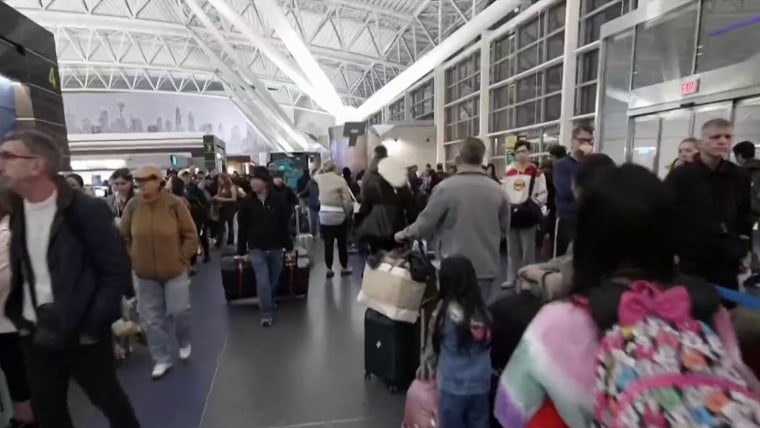
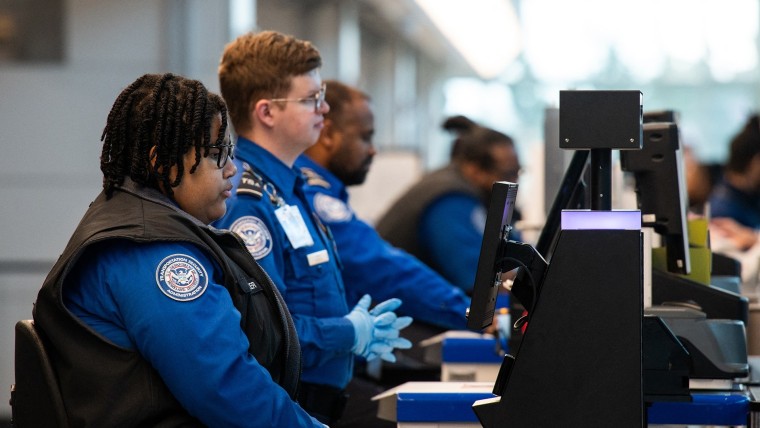
Travelers frustrated by long security lines may not see immediate relief, even as Transportation Security Administration officers begin receiving pay again on Monday after working without wages for more than a month during the partial government shutdown.

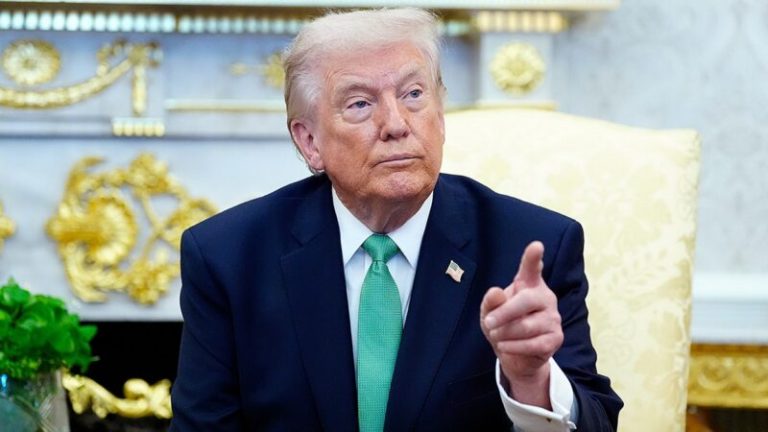
President Donald Trump signed an executive order Thursday directing federal officials to ensure that TSA workers are paid despite the shutdown, breaking a more than 40-day stretch in which officers went without salaries.

But the move is unlikely to bring instant relief at airport checkpoints, according to former TSA Administrator John S. Pistole.

“It’s a temporary fix,” he told NBC News.

The more pertinent question, he said, is how many workers actually return to their posts now that paychecks are set to resume Monday.

More than 500 officers have quit during the shutdown, according to the Department of Homeland Security, while thousands more have called out because they can’t afford basic expenses.

TSA callout rates reached a high of 12.35% of the workforce on Friday, accounting for more than 3,560 employees, a DHS spokesperson said Saturday. The department added that at Trump’s direction and under Homeland Security Secretary Markwayne Mullin, TSA has “immediately begun the process of paying its workforce” and that officers “should begin seeing paychecks as early as Monday, March 30.”

Those shortages have forced travelers to contend with missed and canceled flights, long security lines and growing uncertainty around air travel.

If most officers report back beginning Monday and airports are able to restore staffing, wait times could start to ease within several days to a couple of weeks, Pistole said.

“It really depends on that asterisk of how many people show up,” he said.

Some workers who left may already have other jobs lined up, raising questions about whether some will return at all.

“How many of them come back after they get this paycheck? Or maybe they already have another full-time job lined up, they’re just waiting to inform TSA after they get their check on Monday,” Pistole said. “So there are a number of variables there.”

Pistole said the uncertainty, coupled with TSA’s typical annual attrition rate of about 7%, could mean delays will continue even after pay resumes.

Until then, some travelers may want to consider alternatives such as driving, rail or bus.

“I think many will and are looking at those options to say, ‘Is that more reliable? Because the last thing I want to do is get to Bush International Airport in Houston and have a four-hour wait,’” Pistole said.

The U.S. government will allow a Russian tanker full of crude oil to reach Cuba, effectively easing a blockade that has pushed the island into an energy crisis, according to a report.

The Russian-flagged tanker, the Anatoly Kolodkin, was headed for Cuba on Sunday, carrying an estimated 730,000 barrels of oil, The New York Times reported, citing a U.S. official who had been briefed on the matter.

The tanker Anatoly ⁠Kolodkin was just off the eastern tip of Cuba on Sunday, ship tracking data showed.

“We have a tanker out there. We don’t mind having somebody get a boatload, because they need … they have to survive,” President Donald Trump told reporters on Sunday when asked about the report.

CUBA’S ENTIRE ELECTRICAL GRID COLLAPSES, LEAVING WHOLE ISLAND WITHOUT POWER

“If a country wants to send some oil into Cuba right now, I have no problem whether it’s Russia or not,” he added.

Trump had sought to restrict oil shipments to Cuba in an effort to pressure its government.

The U.S. government has temporarily eased some sanctions on Russian oil shipments to help stabilize global energy markets amid disruptions in the Strait of Hormuz following U.S. and Israeli military strikes on Iran that began last month.

CUBAN OFFICIAL REVEALS MILITARY ‘PREPARING’ FOR CONFLICT AFTER TRUMP CONSIDERS ‘TAKING’ ISLAND

The Anatoly Kolodkin, which departed from Primorsk, Russia, could soon dock at the Matanzas port in Cuba if it remains on its current path, according to tracking services MarineTraffic and LSEG.

The oil would provide significant relief to Cuba, where President Miguel Díaz-Canel has said fuel shortages have persisted for months, forcing strict gas rationing and deepening the island’s energy crisis.

The U.S. capture of then-Venezuelan leader Nicolás Maduro in January stripped a key Cuban ally who had been providing oil to the island on favorable terms.

The Trump administration then blocked all Venezuelan oil shipments to Cuba and vowed to impose punitive tariffs on any third country that supplied shipments to the island, forcing Mexico to stop its exports to Cuba.

Another ship, the Hong Kong-flagged Sea Horse, was also carrying about 200,000 barrels of Russian fuel to Cuba, but was rerouted to Venezuela.

President Donald Trump is used to bending financial markets to his will.

But with the war in Iran, he may have reached the limit of his ability to do so.

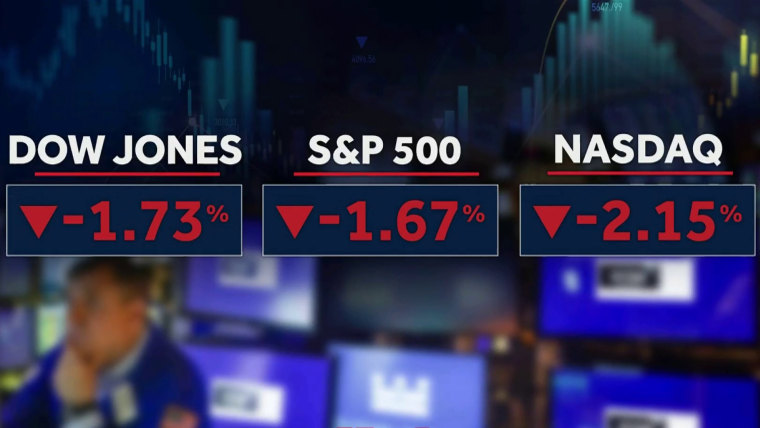
On Friday, the S&P 500 closed down 1.7% and notched its fifth-straight weekly decline, its worst stretch since 2022 and a sign of rapidly faltering confidence in a swift resolution to the Iran war.

Since the U.S. attacked Iran on Feb. 28, the S&P 500 has declined about 7%.

The Dow Jones Industrial Average fell 1.7% Friday and has lost nearly 4,000 points since the start of the war. It is now down more than 10% from its most recent high, a correction in technical terms.

The tech-heavy Nasdaq fell further into correction territory Friday, closing down 2% and off 13% since its record close in October.

Oil prices also rose sharply, with U.S. crude topping $100 a barrel and global Brent crude at approximately $114 at around 4 p.m. ET. The yield on the 10-year Treasury note surged to 4.4%, the highest since last summer. Some energy stocks, like Exxon, traded near all-time highs.

Shortly after stock markets had closed Thursday, Trump announced he was pausing attacks on Iranian energy sites for 10 days. But stocks barely budged.

Just days earlier, they had rocketed higher Monday when the president announced there had been “productive” talks with Iranian representatives, so he would pause strikes on Iranian power facilities for five days.

“The market is looking beyond commentary from the administration,” said Adam Turnquist, chief strategist at LPL Financial investment group, which manages nearly $2 trillion in assets. “They actually want concrete details and a resolution. And actions speak louder than words, that’s really present in [current] price action.”

This new reality stands in contrast to Trump’s ability to move markets throughout his first term and into the outset of his second.

Trump spent the better part of 2025 whipsawing traders via frequent changes regarding tariff levels. Eventually, a pattern emerged: The president would announce a new import duty, markets would fall, and Trump would usually end up reversing himself in some way.

The trend even got a nickname, coined by a columnist for the Financial Times: “TACO” — for “Trump Always Chickens Out.” (Last month, the Supreme Court struck down many of the tariffs.)

This time, the chain of events unleashed by Trump’s decision to attack Iran are such that a return to prewar conditions — and market levels — is virtually impossible in the short or even medium term, experts say.

The disruption to flows of oil and gas has been so substantial that transport costs, and ultimately the price paid per barrel, are likely to stay elevated indefinitely. Even when the Strait of Hormuz, which Iran has used as a chokepoint to drive concessions from the West, eventually reopens, the cost of transiting through it has likely gone up for the foreseeable future.

And the broader fallout on the economy and consumer purchases is already being felt.

That, in turn, has made interest rate cuts by the Federal Reserve less likely, because the higher oil costs are set to contribute to already sticky inflation. The odds of a rate hike before the end of the year have now outpaced the odds of a cut.

“Let’s say hostilities end tomorrow — the market will rally, but it’s not necessarily ripping back to where it was before because of the disruptions that have occurred,” said Steve Sosnick, chief strategist at Interactive Brokers financial group. “You’re not going to see oil go back to where it was immediately. You’re not going to see markets price in rate cuts the way they were before.”

White House spokesman Kush Desai said Friday that Trump “continues to be a powerful force driving the market’s confidence in the United States as the most dynamic, pro-business economy in the world.”

“Once the military objectives of Operation Epic Fury have been achieved and the market’s short-term disruptions are behind us, everyday investors are set to reap a windfall in a booming American economy,” Desai said.

A day earlier, the president said he was not concerned about the market’s recent performance.

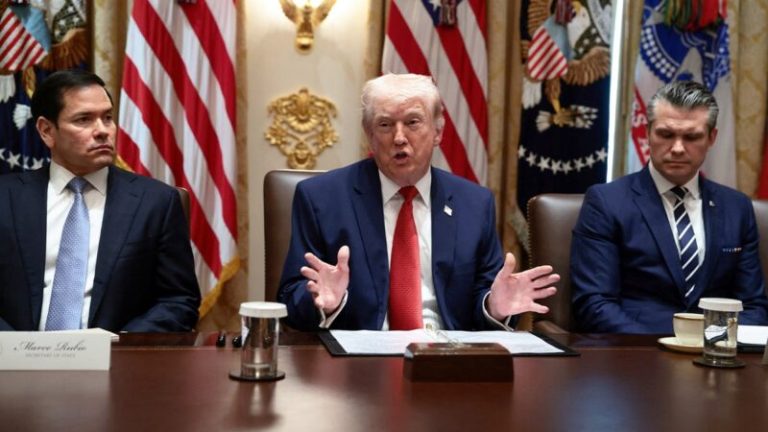
Oil prices “have not gone up as much as I thought, Scott, to be honest with you,” he said during a Cabinet meeting, addressing Treasury Secretary Scott Bessent. “It’s all going to come back down to where it was and probably lower.”

Markets have not fallen further because the outlook for earnings growth remains bullish, Turnquist said — though that could change the longer the conflict drags on and further impinges on consumer spending and business investment.

And compared to prior oil shocks, the U.S. economy is less oil-intensive, as it has transitioned to one that is largely service-oriented. Global oil markets have also been supported by America’s oil production boom over the past decade — with more supplies online, overall prices are less likely to rise as much.

Yet by some metrics, stocks were already considered expensive prior to the hostilities. Having already contended with stretched valuations, traders may find it much harder to power stock prices back to the record levels seen just prior to the start of the latest conflict.

“The risk-reward is still very heavily weighted toward [the] risk” of further stock-price declines,” said Matt Maley, chief market strategist at Miller Tabak financial group.

Should hostilities persist, Trump’s ability to influence markets will only further erode, Sosnick predicted.

“He now realizes he’d like to jawbone his way out of it, but it’s not that easy at this point because the situation encompasses so many moving parts and difficult variables,” Sosnick said. “It doesn’t lend itself to a quick set of comments mollifying investors.”

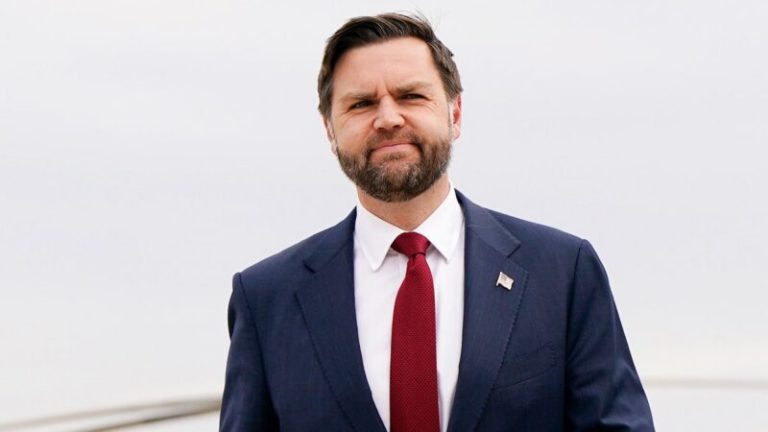
While discussing the mystery surrounding UFOs, Vice President JD Vance, who is Catholic, said he believes what people think of as aliens are actually “demons.”

While interviewing Vance, conservative commentator Benny Johnson asked the vice president, “You gonna release all the UFO files?”

“Ah, we’re workin’ on it,” Vance said. 

He explained that when he took office he “was obsessed with the UFO files” but ended up being busy with other issues.

Vance asserted that he will “get to the bottom” of the matter.

JD VANCE SAYS UFOS, ALIENS COULD BE ‘SPIRITUAL FORCES’ AS VP VOWS TO ‘GET TO THE BOTTOM’ OF MYSTERY IN SKIES

“I don’t think they’re aliens. I think they’re demons anyway,” Vance noted.

Prompted by Johnson, Vance later elaborated on his view.

“Well, look, I, I think that celestial beings who fly around, who do weird things to people — I think that the desire to describe everything celestial… to describe it as aliens — I mean every great world religion, including Christianity, the one that I believe in, has understood that there are weird things out there, and there are things that are very difficult to explain,” he said.

“And I naturally go — when I hear about, sort of, extra-natural phenomenon — that’s where I go to is the Christian understanding that, you know, there’s a lotta good out there, but there’s also some evil out there,” he continued.

UFO SECRET FILES, DRONE SWARMS AND NUCLEAR-LINKED SIGHTINGS STUN EXPERTS IN 2025

He added that he believes that among “the devil’s great tricks is to convince people he never existed.”

Last month, President Donald Trump said he would order the release of files pertaining to the issue of aliens and UFOs.

EXPLOSIVE NEW DOCUMENTARY PROBES ‘80-YEAR GLOBAL COVERUP’ OF UFO SECRETS

“Based on the tremendous interest shown, I will be directing the Secretary of War, and other relevant Departments and Agencies, to begin the process of identifying and releasing Government files related to alien and extraterrestrial life, unidentified aerial phenomena (UAP), and unidentified flying objects (UFOs), and any and all other information connected to these highly complex, but extremely interesting and important, matters. GOD BLESS AMERICA!” the president declared in a February Truth Social post.

WASHINGTON — The Senate agreed unanimously early Friday to fund the Department of Homeland Security, but without funding for immigration enforcement and deportation operations.

Senators approved the package at 2:20 a.m. by voice vote following a marathon session.

The 42-day funding lapse has seen them go without pay, leading many to call out of work and causing long lines at airports. While the measure still needs to pass the House, the Senate vote paves the way to allow airports to fully function again.

The legislation would fund all of DHS except Immigration and Customs Enforcement and Customs and Border Protection, which Democrats have refused to vote for without significant reforms to immigration raids and deportation practices.

The deal followed arduous bipartisan negotiations that occurred in fits and starts over the last six weeks, succumbing to the impasse around policy changes to immigration enforcement. Under the new plan, Democrats get their weeks-long demand to fund the department with the exceptions of ICE or CBP, but also without the restrictions they sought on how immigration officers may conduct operations.

“This could have been done three weeks ago,” Senate Minority Leader Chuck Schumer, D-N.Y., said. “This is exactly what we wanted.”

Long wait lines at a TSA checkpoint at New York’s LaGuardia airport Friday.Gabrielle Korein / NBC News

The bill faces an uncertain future in the Republican-controlled House. It is expected to have President Donald Trump’s support, which could help corral conservatives who have been skeptical about splitting off ICE funding from the underlying bill.

“Hopefully they’ll be around, and we can get at least a lot of the government opened up again, and then we’ll go from there,” Senate Majority Leader John Thune, R-S.D., said of the House and a potential vote on Friday. He said he texted with Speaker Mike Johnson, R-La., on Thursday night.

The Senate adjourned for a two-week recess, leaving the House with few options other than to accept their bill as written.

Thune separately blamed Democrats. “President Trump should never have had to step in to rescue TSA workers and U.S. air travel. We are here because, thanks to Democrats’ determined refusal to reach an agreement, there will be no Homeland Security funding bill this year.”

Speaking after the vote, Schumer said: “In the wake of the murders of Renee Good and Alex Pretti, Senate Democrats were clear. No blank check for a lawless ICE and Border Patrol.”

He added that the “long overdue agreement” funds TSA, the Coast Guard, the Federal Emergency Management Agency and the Cybersecurity and Infrastructure Security Agency, and “strengthens security at the border and the ports of entry, and keeps Americans safe.”

He added that the deal “could have been accomplished weeks ago if Republicans hadn’t stood in the way.”

The White House and Republicans declined to grant Democrats’ demands to restrict Trump’s immigration practices. They now plan to pursue the remainder for funding for ICE and CBP in a separate party-line bill, which they could also use to pass Iran war funding and elements of the Trump-backed SAVE America Act.

Senate Republicans held a vote open for hours Thursday as the two sides continued to negotiate, having traded offers for days.

Trump, meanwhile, announced earlier Thursday that he would instruct newly sworn-in Homeland Security Secretary Markwayne Mullin to “immediately pay our TSA Agents in order to address this Emergency Situation.”

That move may not be needed if the House passes the Senate legislation, according to a senior administration official, who said the White House is waiting to see what will happen.

This official also said the funds to pay TSA agents would come from the so-called One Big Beautiful Bill, the tax-cut and spending legislation Trump signed into law in July. It’s not clear exactly how that would work, but the administration has dipped into those unspent funds before to cover pay gaps during funding lapses.

The House can either debate and vote out the Senate-passed measures in the Rules Committee before bringing them to the floor under a simple majority vote, or Johnson can seek to fast-track it to the floor.

The House was set to hold an unrelated vote at 10 a.m. before leaving for recess.

We’d like to hear from you about how you’re experiencing the partial government shutdown, whether you’re a TSA agent who can’t work right now or a federal employee who is feeling the effects at your agency. Please contact us at tips@nbcuni.com or reach out to us here.

TSA officers missed their first full paychecks in mid-March, leading many to call out of work. Call-out rates for TSA officers have exceeded 11% nationally, with rates at some airports passing 40%.

Trump sent ICE agents to airports to help TSA earlier this week. Unlike TSA officers, ICE agents continue to receive paychecks during the partial shutdown as a result of funding from the so-called One Big Beautiful Bill, a sweeping GOP domestic policy package, that Trump signed into law last year.

President Donald Trump on Friday signed an executive order directing federal officials to ensure Transportation Security Administration (TSA) employees receive back pay during the ongoing Department of Homeland Security (DHS) shutdown.

Trump described the situation as an “emergency,” citing severe strain on airport security operations. 

“Accordingly, I hereby direct the Secretary of Homeland Security, in coordination with the Director of the Office of Management and Budget, to use funds that have a reasonable and logical nexus to TSA operations to provide TSA employees with the compensation and benefits that would have accrued to them if not for the Democrat-led DHS shutdown, consistent with applicable law, including 31 U.S.C. 1301(a),” Trump said.

This is a breaking news story. Please check back for updates.

Federal authorities are investigating a close call this week involving a military helicopter and a United Airlines plane approaching John Wayne Airport in Santa Ana.

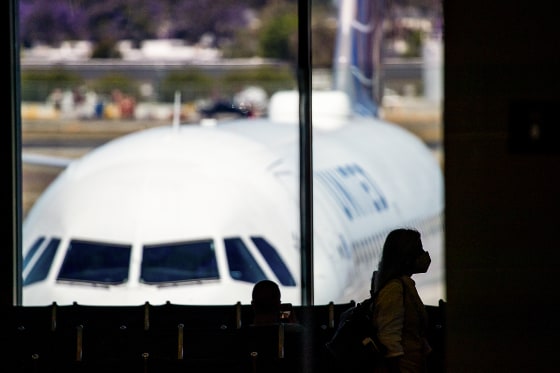
United Airlines Flight 589 was approaching the airport in Orange County around 8:40 p.m. Tuesday when a Sikorsky Black Hawk helicopter crossed its path, according to the Federal Aviation Administration.

Pilots on the United Airlines plane were advised by air traffic control to watch for the military helicopter flying near the airport, United Airlines said.

“They saw the helicopter, and also received a traffic alert, which they responded to by leveling the aircraft,” United said.

The United flight with 162 passengers and six crew members landed safely.

The new investigation comes a week after the FAA issued a new airport safety order designed to improve safety near airports where helicopters cross both arrival and departure paths. The order suspends use of visual separation between airplanes and helicopters and requires air traffic controllers to use radar to manage lateral and vertical separation between aircraft.

A close call earlier this month between a twin-engine Beechcraft 99 and helicopter at Hollywood Burbank Airport was cited by federal authorities as a key factor behind a new airport safety measure.

In another example, the agency said American Airlines Flight 1657 was cleared to land at San Antonio International Airport when a police helicopter was on its final approach path. The helicopter turned to avoid the American Airlines plane, the FAA said.

The new requirement applies to more than 150 of the nation’s busiest airports and extends a restriction already in place at Ronald Reagan Washington National Airport.

The upgraded safety measure was rolled out after a year-long FAA safety team review. In a news release, the FAA also referenced the Jan. 29 American Airlines jet and Army Black Hawk crash that killed 67 people. A key factor in the crash was the placement of a helicopter route in the approach path of Reagan National Airport’s secondary runway, the NTSB board said, also identifying air traffic controllers’ over reliance on asking helicopter pilots to avoid other aircraft as a factor.

President Donald Trump’s push to expand U.S. mining and loosen China’s global grip on critical minerals is colliding with his administration’s defense in court of a Biden-era veto blocking Alaska’s copper-rich Pebble Mine, reviving scrutiny of Donald Trump Jr.’s past opposition to the project.

The fight over Pebble Mine has spanned multiple administrations. Including in 2014, when the Obama Environmental Protection Agency concluded mining in Bristol Bay’s headwaters could damage the world’s largest sockeye salmon fishery. Biden’s EPA vetoed the project in January 2023, prompting a lawsuit from Pebble and the state of Alaska. The Trump Department of Justice is now defending that veto in court. 

The clash under the Trump administration has given Pebble supporters new ammunition to argue the White House is undercutting its own agenda as Trump races to secure domestic supplies of copper and other minerals critical to defense systems and advanced technology.

It also puts Trump Jr.’s stance on Pebble Mine back in focus. In 2020, Trump Jr. publicly opposed the mine, joining GOP operative Nick Ayers, who served as chief of staff to former Vice President Mike Pence, in citing concerns about the local bay’s ecosystem. 

FROM MOJAVE TO BEIJING: HOW AMERICA QUIETLY CONCEDED THE RARE EARTH RACE

“As a sportsman who has spent plenty of time in the area I agree 100% [with Ayers],” Trump Jr. wrote on X in August 2020. “The headwaters of Bristol Bay and the surrounding fishery are too unique and fragile to take any chances with. #PebbleMine.”

Policy paradox

John Shively, CEO of Pebble Limited Partnership, the company hoping to develop the mine, contended that the Trump DOJ defending the Biden-era veto undermines the president’s agenda and would force the United States to cede copper and rare earth minerals to Beijing. Shively called the veto a “textbook example of D.C. bureaucrats imposing their will on Alaska.”

“It sort of conflicts a little bit with what President Trump is doing,” Shively told Fox News Digital in an interview. “I’ll give him credit. One of the things I like to say in life is, ‘If you don’t recognize a problem, you’re never going to solve it.’ Well, they have recognized we’re in serious trouble in getting minerals in this country and metals, and so it’s a little surprising they continued the EPA lawsuit.”

The White House and EPA did not respond to multiple requests for comment for this story. The DOJ, which is representing EPA in court as it fights to keep the Biden-era veto in place, declined to comment and deferred to the EPA.

Since Trump took office, his administration has moved quickly to dismantle the environmental policies of his liberal predecessors and strengthen the United States’ mineral supply. Trump signed executive orders that declared a national emergency on critical minerals, directed federal agencies to fast-track permitting processes and expanded the government’s list of critical minerals by adding copper and nine others to the list.

Trump Jr., an avid outdoorsman, has not spoken to the president or anyone in the administration during this term about Pebble Mine, but he did weigh in on the matter with his father in the first term, a source close to Trump Jr. told Fox News Digital. 

One industry source who spoke to Fox News Digital pointed to Trump Jr. and Ayers, attributing the Trump administration’s position on Pebble Mine in part to them. Ayers, like Trump Jr., openly opposed the mine in an X post in 2020.

“Like millions of conservationists and sportsmen, I am hoping @realDonaldTrump will direct @EPA to block the Pebble mine in Bristol Bay,” Ayers wrote on X. “A Canadian company will unnecessarily mine the USA’s greatest fishery at a severe cost. This should be stopped.” Pebble, which is spearheading the mine project, is a U.S. offshoot of Canadian company Northern Dynasty Minerals.

Ayers did not provide comment for this story.

The source close to Trump Jr. said that in the first administration, the president’s son told associates he was concerned, having been to Bristol Bay to fish on multiple occasions, about the mine’s potential effect on the ecosystem there.

The industry source balked at the Trump administration’s Pebble Mine contradiction, saying it was rooted in profit motives. The source told Fox News Digital that “these guys are cheap dates. … Like you sold your soul for a fishing trip on a boat for a week.” 

“How can you open at the one hand this reserve of rare earths to stop the Chinese from cornering the market, but then say, ‘We’re not going to have our own mining industry’?” the source said.

CHINA’S RARE EARTH TECH OBSESSION ENSNARES US RESIDENT AS CCP LOOKS TO MAINTAIN STRANGLEHOLD

When asked about potential outside influences affecting the administration’s position, Shively said: “Instead of focusing on comments from the past, we hope the administration is worried about the next president using this EPA veto to shut down signature Trump energy and critical mineral projects.”

A ‘kill switch’ to save the salmon

The veto, also known as a “kill switch,” is a rarely-used mechanism of the Clean Water Act. The law allows a company to seek a mining permit from the U.S. Army Corps of Engineers, but the EPA can use the kill switch to block the permit.

Pebble’s permit request was rejected in the first Trump term, but Pebble won a reversal of that decision through an internal appeals process. That internal process was still playing out when the Biden administration issued the veto.

Pebble is asking the court to scrap the veto and allow the company to continue with the permitting process.

Pebble lawyers have argued that the company “spent decades and a billion dollars planning the safest and least impactful mine possible” and that studies adequately addressed the salmon concerns.

Copper and other critical minerals

China is the world’s leading import source for more than two dozen critical minerals, including most rare earth minerals. The Trump administration has said that domestic access to critical minerals, including rare earths, is fundamental to national security and AI infrastructure.

The United States has, in recent decades, gone from dominating the production of the world’s rare earths to relying on China, which now controls roughly 70% of mining and nearly 90% of refining, Fox News Digital previously reported. 

China dominates the refining of many critical minerals and more than half of global copper refining, while the U.S. imports roughly 45% of its copper supply. Pebble says the mine could supply about 15% of U.S. copper demand.

“We’ve already committed to building a lot more defense capacity,” Shively said, noting that copper would be used for nuclear submarines, large aircraft carriers, jets and more crucial defense supplies.

In addition to copper, the Pebble mineral deposit is also rich in rare earths, Shively said, noting Pebble could mine rhenium and molydbdenum, which is used to strengthen steel. 

Shively said the veto, if the court approves it, would set a dangerous precedent that allows future administrations and activists to level broader Clean Water Act vetoes. The current veto targets an expansive 220,000-acre area of Alaska containing an estimated 80 billion pounds of copper, according to court papers. 

“If they can use this tool against us, they can use it anywhere in the country,” Shively said. “And when you get rabid environmentalists in government, they tend to use these kinds of tools.”

Briefing in the lawsuit is set to be completed by mid-April, and the court could issue a decision anytime after that or call for oral arguments to continue examining the fight.


U.S. stocks rose Wednesday and global oil prices fell in yet another volatile trading session as traders and investors were buffeted by constant headlines about the war in Iran.

News of a 15-point U.S. peace plan proposal sparked hopes early in the day that the Trump administration was moving to end its monthlong war against Iran. Initially, the S&P 500 and the Nasdaq 100 futures rose more than 1%.

But reports that Iran had responded negatively to the proposal briefly knocked index futures off their pre-market highs and lifted oil prices off their morning lows.

Despite the early setback, stocks closed the trading day higher. At 4 p.m. ET, the S&P 500 index was up about 0.4%, the Nasdaq Composite closed 0.7% higher, and the Dow jumped 305 points. The Russell 2000 index of smaller companies rose 1.1%.

The price of U.S. crude oil also traded off its lowest levels of the day and was down only 1.4% to about $90 per barrel by late afternoon. West Texas Intermediate crude oil has soared more than 30% since the start of the war on Feb. 28. The cost per barrel is up 50% since the beginning of the year.

International Brent crude prices traded near breakeven, at around $102 per barrel. The price of heating oil, a proxy for jet fuel, dropped 6%.

The global price of oil directly affects what Americans pay at the gas pump and what it costs them to heat and cool their homes. The average nationwide price of unleaded gas Wednesday was $3.98 per gallon, according to AAA data.

“Markets desperately want to believe in the positive,” UBS Global Wealth Management chief economist Paul Donovan wrote. “Focus on the apparent 15-point US plan to end the war has received more attention than Iranian dismissals of this, or the fact that passage through the Strait of Hormuz is minimal.”

Iran’s response to the U.S. proposal included a list of five conditions for ending the war, according to Iranian state TV, which cited a senior political-security official with knowledge of the details of the proposal.

Pakistan has also offered to mediate talks to end the hostilities, four sources told NBC News. A Persian Gulf official said Pakistan had been passing messages between the two countries for the past two days.

An in-person meeting between the U.S. and Iran could be held in the coming days, two sources added.

But President Donald Trump has continued to give conflicting signals.

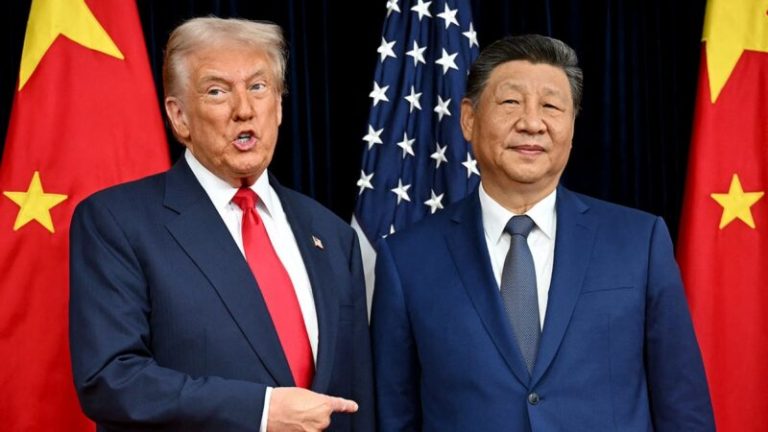
On March 16, Trump said he was delaying his scheduled visit to China “by a month or so” to monitor the war. On Monday, he said the Strait of Hormuz would be “open very soon.”

And on Tuesday, Trump told reporters in the Oval Office, “This war has been won.” At the same time, the U.S. is sending more than 1,000 additional troops to the Middle East, sources said.

A motorist drives past a sign displaying prices at a gas station in Oakland, Calif., on Tuesday.Godofredo A. Vásquez / AP

Since the war started, the market has experienced several days like this, when markets are whipsawed by constant back-and-forth comments.

“There’s really no way to know at this point what the facts are regarding the state of negotiations, as neither side has any real incentive to conduct talks via the press, so expect more whipsaw action as things continue to progress,” analysts at Bespoke Investment Group wrote in a client note.

They added that the “ongoing tensions continue to support higher prices [and] stoke inflation concerns” and are likely to cause central banks to remain on hold, rather than cut rates.

On the contrary, traders believe the European Central Bank and the Bank of England will both raise interest rates.

“Uncertainty remains high,” analysts at ING wrote in a note Wednesday morning. “Overall, volatility remains elevated and a geopolitical risk premium persists.”

In the 18 trading sessions since the war began, U.S. oil prices have closed down only five times. Likewise, over the same period, the S&P 500 has closed higher only seven times. Three of those higher closes were only fractional.

After Wednesday’s close, the Nasdaq was down nearly 6% for the year, while the S&P 500 was on track for a 3.5% loss so far. The majority of those losses were concentrated in the weeks since the war began.

Meanwhile, the Strait of Hormuz, through which 20% of the world’s oil supply typically passes, has remained at a near standstill since the war began.

On Monday, just five ships passed through the strait, according to data compiled by S&P Global Market Intelligence. On Tuesday, the total was six. On many days since the war started, not a single ship has passed through.

However, some of the ships passing through the strait have taken an unusual course that put them close to the Iranian coastline, potentially signaling that Tehran was keeping a tight grip on traffic flows. Two Indian ships were granted passage Tuesday after a deal with Iran, Bloomberg News reported. The Iranian navy also guided the ships.

Otherwise, hundreds of other ships loaded up with cargo, oil and liquefied natural gas remain stuck.