Archive

March 2026

Browsing

The Government of New Brunswick announced a new comprehensive mineral strategy on Tuesday (March 3), at the 2026 Prospectors and Developers Association of Canada conference in Toronto.

The plan calls for a streamlined permitting process that will ensure clear communication and transparent timelines. Additionally, it promises a collaborative partnership with First Nations, science-based decision-making and a community-based approach to jobs, procurement and infrastructure.

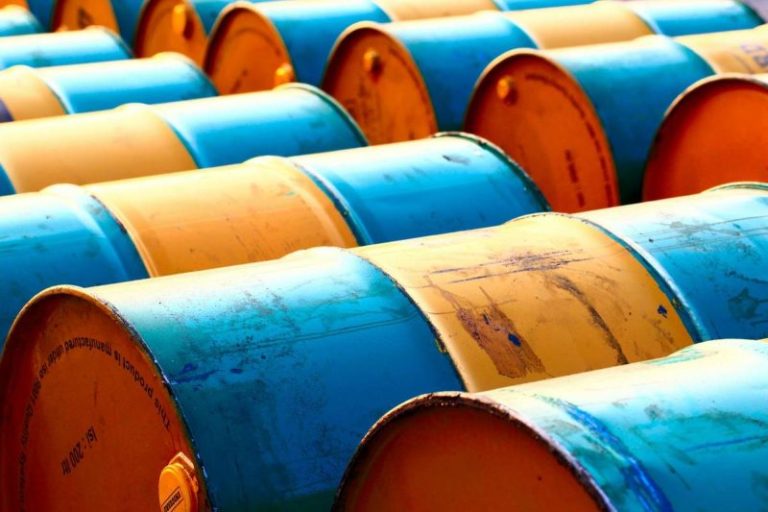
Oil prices jumped significantly this week following the start of the US-led war against Iran. West Texas Intermediate has surged more than 25 percent since March first, climbing to over US$90 per barrel in trading on Friday, the first time since October 2022.

The most significant gains came on Friday, after Iran effectively stopped traffic through the Strait of Hormuz. More than 20 percent of the world’s liquefied natural gas and 25 percent of oil shipments travel through the strait.

The price rise has had a downstream effect on gas prices in Canada and the US, increasing by up to C$0.10 per liter and US$0.27 per gallon, respectively.

Over the past week, US producers have activated four additional rigs, bringing the total rig count to 411, although that total is down by 75 from the same period last year. Most companies are unlikely to rush to restart operations shuttered due to low oil prices until there is a more sustainable rise in oil prices.

Meanwhile, the war caused turmoil in bond markets as concerns over inflation and rising central bank interest rates seeped into the market. US two-year bonds rose by 18 basis points, while Britain’s rose by 43 basis points.

For more on what’s moving markets this week, check out our top market news round-up.

Markets and commodities react

Canadian equity markets were largely down this week.

The S&P/TSX Composite Index (INDEXTSI:OSPTX) fell 3.87 percent over the week to close Friday (March 6) at 33,083.72, while the S&P/TSX Venture Composite Index (INDEXTSI:JX) slipped 4.54 percent to 1,057.04.

However, the CSE Composite Index (CSE:CSECOMP) gained 1.27 percent to 178.51.

The gold price fell 3.31 percent to close at US$5,170.63 per ounce on Friday at 4:00 p.m. EST. The silver price fared worse, closing the week down 6.4 percent at US$84.30 on Friday.

In base metals, the Comex copper price recorded a 2.01 percent decrease this week to US$5.85 per pound.

The S&P Goldman Sachs Commodities Index (INDEXSP:SPGSCI) was up 16.14 percent to end Friday at 700.62.

Top Canadian mining stocks this week

How did mining stocks perform against this backdrop? Take a look at this week’s five best-performing Canadian mining stocks below.

Stocks data for this article was retrieved at 4:00 p.m. EST on Friday using TradingView’s stock screener. Only companies trading on the TSX, TSXV and CSE with market caps greater than C$10 million are included. Mineral companies within the non-energy minerals, energy minerals, process industry and producer manufacturing sectors were considered.

1. Adex Mining (TSXV:ADE)

Weekly gain: 100 percent
Market cap: C$128.67 million
Share price: C$0.19

Adex Mining is an exploration company that holds a 100 percent stake in the Mount Pleasant project in Southwest New Brunswick, Canada. The property contains two main deposits: the Fire Tower zone, which hosts tungsten and molybdenum mineralization, and the North zone, which hosts tin, zinc and indium.

The asset consists of 102 mineral claims covering 1,600 hectares, as well as equipment and facilities from historic mining operations conducted by BHP (ASX:BHP,NYSE:BHP,LSE:BHP) between 1983 and 1985.

According to its most recent investor presentation released on June 11, the property hosts the world’s largest indium reserve and North America’s largest tin deposit. Indicated resources for the North zone demonstrate contained metal values of 47 million kilograms of tin, and 789,000 kilograms of indium from 12.4 million metric tons with average grades of 0.38 percent tin and 64 parts per million indium.

Adex Mining has not released news since it published its interim management discussion and analysis on November 18.

In a mid-February interview, New Brunswick Natural Resources Minister John Herron revealed that a deal “is due imminently with a well-known company in the Canadian mining community” for Adex’s Mount Pleasant project.

While the company did not release news this week, the project may benefit from the freshly announced New Brunswick Comprehensive Mineral Strategy. The report highlights Mount Pleasant’s indium, tin and tungsten mineralization.

2. Southern Energy (TSXV:SOU)

Weekly gain: 91.67 percent
Market cap: C$29.3 million
Share price: C$0.115

Southern Energy is an oil and gas company with assets located in Mississippi, US. The majority of its production is natural gas.

Its operations are centered around the state’s Interior Salt Basin, in the northeastern Gulf Coast Region. Southern has an interest in producing wells spread across several assets, including Gwinville, Mechanicsburg and Mount Olive East.

According to a February 2026 corporate presentation, current production from the company’s wells is about 11 million cubic feet of natural gas equivalent per day, with 27.9 million barrels of oil equivalent in reserves.

The company’s most recent news came on February 12, when Southern closed a non-brokered private placement that generated proceeds of US$23.5 million. The company said the funds will be used to repay the balance of a US$12.9 million senior credit facility, with the rest being directed to development capital, including the completion of two wells in Gwinville.

The share price gains also come amid volatility in the energy market.

3. Africa Energy (TSXV:AFE)

Weekly gain: 86.67 percent
Market cap: C$165.31 million
Share price: C$0.42

Africa Energy is a South Africa focused oil and gas exploration and development company.

Its flagship asset is Block 11B/12B located approximately 175 kilometers off the south coast of South Africa. The block covers an area of 18,734 square kilometers and depths between 200 meters and 1,800 meters.

It holds a 4.9 percent interest in the asset through its investment in Main Street 1549, a 49/51 joint venture with Arostyle Investments. The three other partners in the asset announced plans to withdraw from the Block 11B/12B joint venture in July 2024, and announced a definitive agreement for the new ownership structure of the Block 11B/12B asset in May 2025.

The restructuring would result in Africa Energy owning a direct 75 percent stake in the block, with Arostyle holding the remainder. This is contingent on the asset being granted the production rights, which itself requires approval of its environmental and social impact assessment. The report must be submitted by May 2026.

Shares of Africa Energy posted gains this week amid energy market volatility.

The company has not released any news since January 26, when it announced the resignation of Dr. Phindile Masangane as Director and Head of Strategy and Business Development. She will still assist Africa Energy as a consultant.

4. Gabriel Resources (TSXV:GBU)

Weekly gain: 60 percent
Market cap: C$41.58 million
Share price: C$0.16

Gabriel Resources is a precious metals explorer and developer focused on advancing its Rosia Montana gold project. Based in Transylvania, Romania, Rosia Montana is in a region that has seen significant historic mining. Covering 2,388 hectares, the site is host to a mid-to-shallow epithermal system containing deposits of gold and silver.

The most recent resource estimate from a 2012 technical report shows proven and probable quantities of 10.1 million ounces of gold and 47.6 million ounces of silver. Gabriel has invested more than US$760 million into Rosia Montana, but has undertaken little development at the site since the early 2010s, as Romania blocked further development.

In 2015, the company entered into arbitration through the World Bank’s International Center for Settlement of Investment Disputes (ICSID) over permitting at the site and suggested that Romania was in violation of bilateral investment treaties. In March 2024, Gabriel issued a press release with an update saying that its case against Romania had been dismissed by the ICSID, which also awarded Romania US$10 million in legal fees and expenses. Gabriel said it would review the decision with its legal team and evaluate its options.

In March 2025, Gabriel announced that the committee had ruled that a stay of enforcement of the Award would continue if Gabriel guaranteed the proven solvency of the US$10 million.

The committee was scheduled to hold hearings on January 22 and 23 of this year, but on January 19, Gabriel reported that the hearings would be postponed to a later date. A new date for the hearing has not been announced.

The company did not release news in the past week.

5. Rio Silver (TSXV:RYO)

Weekly gain: 48.05 percent
Market cap: C$41.58 million
Share price: C$1.14

Rio Silver is an exploration company advancing its Maria Norte project in Peru. The property changed hands several times in the 18 years prior to Rio Silver’s acquisition in March 2025, but saw little exploration during that time.

However, in a February 5 release, the company noted that historic mining occurred as the site hosts a reclaimed waste dump. In that announcement, the firm said it plans to advance surface mapping and sampling in the third quarter of 2026.

Throughout January, Rio Silver made several announcements regarding its exploration and development timeline. On January 6, the company reported results from technical work at the site, confirming the presence of silver mineralization with grades up to 991 g/t in a 0.7 meter channel sample.

To end the month, the company said it was launching a metallurgical program at the site to assist in determining the project’s potential value.

The most recent news came last week in a pair of releases.

The first on February 25, the company announced a new private placement to raise proceeds of up to C$3 million. Funds will be used to advance work at the Maria Norte project. The placement is being led by Sprott (TSX:SII,NYSE:SII) Founder Eric Sprott.

The second release came on February 26 when Rio reported it secured permission from the local community to begin site activities at Maria Norte. The company said it will continue working with the community to develop a formal definitive agreement for long-term exploration and mining activities.

FAQs for Canadian mining stocks

What is the difference between the TSX and TSXV?

The TSX, or Toronto Stock Exchange, is used by senior companies with larger market caps, and the TSXV, or TSX Venture Exchange, is used by smaller-cap companies. Companies listed on the TSXV can graduate to the senior exchange.

How many mining companies are listed on the TSX and TSXV?

As of December 2025, 898 mining companies and 71 oil and gas companies are listed on the TSXV, combining for more than 60 percent of the 1,531 total companies listed on the exchange.

As for the TSX, it is home to 175 mining companies and 51 oil and gas companies. The exchange has 2,089 companies listed on it in total.

Together, the TSX and TSXV host around 40 percent of the world’s public mining companies.

How much does it cost to list on the TSXV?

There are a variety of different fees that companies must pay to list on the TSXV, and according to the exchange, they can vary based on the transaction’s nature and complexity. The listing fee alone will most likely cost between C$10,000 to C$70,000. Accounting and auditing fees could rack up between C$25,000 and C$100,000, while legal fees are expected to be over C$75,000 and an underwriters’ commission may hit up to 12 percent.

The exchange lists a handful of other fees and expenses companies can expect, including but not limited to security commission and transfer agency fees, investor relations costs and director and officer liability insurance.

These are all just for the initial listing, of course. There are ongoing expenses once companies are trading, such as sustaining fees and additional listing fees, plus the costs associated with filing regular reports.

How do you trade on the TSXV?

Investors can trade on the TSXV the way they would trade stocks on any exchange. This means they can use a stock broker or an individual investment account to buy and sell shares of TSXV-listed companies during the exchange’s trading hours.

Article by Dean Belder; FAQs by Lauren Kelly.

Securities Disclosure: I, Dean Belder, hold no direct investment interest in any company mentioned in this article.

Securities Disclosure: I, Lauren Kelly, hold no direct investment interest in any company mentioned in this article.

This post appeared first on investingnews.com

Kristi Noem will reportedly join President Donald Trump and 12 Latin American leaders at his resort in Florida for a ‘Shield of the Americas’ summit Saturday after her ouster as the Secretary of Homeland Security and appointment by President Donald Trump to be special envoy for the new coalition of nations. 

On Thursday, Trump announced Noem would be exiting her role as Homeland Security secretary and would be appointed a Special Envoy for the ‘Shield of the Americas,’ a summit for which will be held at the president’s resort in Doral, Florida, on Saturday. The new coalition of 13 countries has been formed to advance strategies that will tackle mass illegal immigration, narco-terrorist gangs and cartels. 

‘After years of neglect, President Trump established the ‘Donroe Doctrine’ to restore American preeminence in the Western Hemisphere. His efforts have been a tremendous success – our southern border is secure, Latin American countries are working with us to defeat the cartels, and illegitimate dictator Nicolas Maduro is facing justice for his crimes in the Southern District of New York – ushering in historic economic cooperation with Venezuela,’ said White House spokesperson Anna Kelly ahead of the summit. 

‘The President has successfully strengthened our relationships in our own backyard to make the entire region safer and more stable, and this weekend’s ‘Shield of the Americas’ Summit will encapsulate all of his work to Make America, and our partners, Strong Again,’ she continued.

Members of Trump’s Cabinet, including Secretary of State Marco Rubio, Secretary of War Pete Hegseth, Secretary of Commerce Howard Lutnick and United States Trade Representative Jamieson Greer, will also be at the Saturday summit. 

The leaders from other nations who will be present are Argentina’s Javier Milei, El Salvador’s Nayib Bukele Ortez, Bolivia’s Rodrigo Paz Pereira, Costa Rica’s Rodrigo Chaves Robles, Panama’s José Raúl Mulino Quintero, and Trinidad and Tobago’s Kamla Persad-Bissessar, Chile’s Jose Antonio Kast, the Dominican Republic’s Luis Rodolfo Abinader Corona, Ecuador’s Daniel Roy Gilchrist Noboa Azín, Guyana’s Mohamed Irfaan Ali, Honduras’ Nasry ‘Tito’ Asfura, and Paraguay’s Santiago Peña.

Noem confirmed Friday, speaking from Nashville, that she will be at the summit, according to the Associated Press. Noem reportedly added that the president will announce ‘a big agreement’ detailing ‘how we’re going to go after cartels and drug trafficking in the entire Western Hemisphere.’ 

On Friday, Hegseth led a strategic conference in Doral with representatives of 17 different Caribbean, Central American and South American countries throughout the Western Hemisphere. During the conference, they signed a joint security declaration, reaffirming their commitment to peace and sovereignty in the region. According to a source familiar with the plans for the summit, the president plans to celebrate this achievement with attendees.

‘Secretary Noem helped usher in the most secure border in history, deported hundreds of thousands of criminal illegal aliens, and executed record-setting counter-drug operations against cartels. All of this great experience positions Noem well to ensure American preeminence in the entire Western Hemisphere in her new role as Special Envoy to the Shield of the Americas,’ White House spokesperson Olivia Wales said. ‘This historic new security initiative, led by Secretary Noem, will advance cutting-edge strategies to defeat narco-terrorist cartels and stop illegal mass migration to make America and the entire Western Hemisphere safer.’

On Thursday, Rubio said he looked forward to working with Noem as Special Envoy for The Shield of the Americas, and echoed the comments from the White House about her experience.

‘Kristi has achieved incredible results as Secretary of Homeland Security and will be a tremendous asset in our effort to promote security and prosperity in the Western Hemisphere,’ Rubio said on X after Trump named Noem to her new post. 

Related Article

Capitol Hill Dems hail Trump’s DHS ouster of Noem after heated Senate hearing
This post appeared first on FOX NEWS

Listen up, flyers: United Airlines said it will start removing passengers from flights who refuse to wear headphones while listening to content on their personal devices, and such behavior could lead to a permanent ban.

The airline revised its contract of carriage on Feb. 27 to include the new provision, which sits under the ‘refusal of transport’ section that outlines the instances in which United can boot its passengers from flights.

According to the document, United reserves the right to refuse transport — on a permanent basis — to any passenger who listens to their entertainment on speaker.

It also states that any passenger who causes United ‘any loss, damage or expense of any kind,’ may be responsible for reimbursing the airline.

‘We’ve always encouraged customers to use headphones when listening to audio content — and our Wi-Fi rules already remind customers to use headphones,’ United said in a statement. ‘With the expansion of Starlink, it seemed like a good time to make that even clearer by adding it to the contract of carriage.’

Passengers who forgot their headphones at home can request a free pair on their flight, if they’re available, according to United’s in-flight entertainment information.

The move inspired a strong reaction online.

‘One would think this is common sense and airlines would have in their rules,’ said one Reddit user. ‘Now let’s have the same rule for airline lounges.’

Others complained that this has become increasingly common on flights, especially among those with small children.

‘As a flight attendant; we have to tell people literally every flight,’ another person said on Reddit. ‘It makes our jobs harder when we’re stuck policing common courtesy instead of just focusing on service & safety.’

This post appeared first on NBC NEWS

The global platinum market is expected to remain in deficit for a fourth consecutive year in 2026, even as supply begins to stabilize and demand moderates following a sharp rally in the metal’s price.

New projections from the World Platinum Investment Council (WPIC) show a deficit of about 240,000 ounces for 2026 following a significantly larger shortfall of 1.082 million ounces in 2025.

That’s the deepest deficit recorded in the group’s Platinum Quarterly data series since it began in 2014. According to data, the cumulative deficit since 2023 will approach 3 million ounces by the end of 2026.

As a result, aboveground platinum stocks are expected to remain historically low, falling to about 2.613 million ounces, which is equivalent to just over four months of global demand for the precious metal.

WPIC CEO Trevor Raymond said the factors that fueled platinum’s strong performance last year are expected to remain.

“The key drivers of platinum’s price rally in 2025, namely strong supply/demand fundamentals, a depletion of above ground stocks, and macropolitical uncertainty-driven precious metals demand, are expected to persist in 2026,” he said.

“Consequently, market tightness is likely to continue, maintaining investor interest in platinum, and further supporting bar and coin and ETF demand throughout the year.”

Platinum investment strength offsets softer overall demand

The forecast marks a shift from earlier expectations that the platinum market would return to balance in 2026.

Instead, strong investment sentiment and resilient exchange-traded fund holdings have pushed the market back into deficit territory. Even so, total demand for platinum is expected to decline moderately this year.

The WPIC projects overall demand will fall about 8 percent year-on-year to roughly 7.619 million ounces.

Much of that drop reflects a normalization in investment demand after a surge in 2025, when inflows into platinum exchange-traded funds and physical investment products climbed sharply.

However, demand for physical platinum bars and coins is expected to continue growing.

The WPIC forecasts that bar and coin investment will jump 35 percent in 2026 to 725,000 ounces, reaching the highest level recorded in the Platinum Quarterly dataset.

Investment purchases of platinum are increasing as the metal gains attention as a lower-priced alternative to gold, and as retail investment products become more widely available.

Supply growth lags as platinum deficit persists

While demand patterns shift across sectors, platinum supply growth remains limited.

Total platinum supply is expected to rise just 2 percent in 2026 to about 7.379 million ounces.

Mine output is forecast to remain essentially flat at roughly 5.553 million ounces, with production gains in South Africa and Zimbabwe offset by declines in North America and Russia.

The modest increase in supply will largely come from recycling. Higher platinum prices have encouraged the recovery of spent autocatalysts and recycled jewelry, pushing recycling supply up about 10 percent in 2025. That trend is expected to continue this year, with recycled metal rising another 10 percent to approximately 1.827 million ounces.

Still, the additional recycled material is unlikely to fully offset the underlying market tightness. As Raymond noted, another factor that could further deepen the deficit has yet to be fully reflected in current forecasts.

“One item not yet captured in the supply/demand balance is any exchange stocks warehoused with the Guangzhou Futures Exchange, which could potentially deepen the deficit versus current projections once these are made publicly available,” he said. For platinum investors, the persistence of deficits suggests that the market’s underlying fundamentals remain supportive even as demand moderates from last year’s highs.

“The price rally we’ve seen this year has not solved the deficit,” he said.

“Normally, in a deficit market, you would expect the price to increase. Clearly, the elevated prices we’ve experienced is still insufficient to attract more supply into the market or drag more metal out of aboveground stocks.”

With supply growth limited and inventories shrinking, the platinum market is likely to remain structurally tight, sustaining investor interest through 2026.

Securities Disclosure: I, Giann Liguid, hold no direct investment interest in any company mentioned in this article.

This post appeared first on investingnews.com

This story discusses suicide. If you or someone you know is having thoughts of suicide, please contact the Suicide and Crisis Lifeline at 988 or 800-273-TALK (8255).

Rep. Tony Gonzales, R-Texas, announced Thursday evening he will not seek re-election amid a House Ethics investigation into an affair he admitted to having with a former staffer.

Gonzales, a married father of 6, admitted to the affair for the first time during an appearance on a conservative talk radio show on Wednesday – a day after advancing to the GOP primary runoff for his congressional district.

‘At 18, I swore an oath to defend our nation against all enemies, foreign and domestic. During my 20 years in the military and three terms in Congress, I have fought for that cause with absolute dedication to the country that I love,’ Gonzales said in a statement.

‘From overcoming the border crisis to taking a stand with my communities after the worst school shooting in Texas’ history, my philosophy has never changed: do as much as you can, and always fight for the greater good,’ he continued.

‘After deep reflection and with the support of my loving family, I have decided not to seek re-election while serving out the rest of this Congress with the same commitment I’ve always had to my district,’ he added. ‘Through the rest of my term, I will continue fighting for my constituents, for whom I am eternally grateful.’

‘I made a mistake, and I had a lapse in judgment, and there was a lack of faith, and I take full responsibility for those actions,’ he said on ‘The Joe Pags Show’ Wednesday night. ‘Since then, I’ve reconciled with my wife, Angel. I’ve asked God to forgive me, which he has, and my faith is as strong as ever.’

The House Ethics Committee also launched an investigation into Gonzales on Wednesday to determine if he engaged in sexual misconduct with a female member of his staff and whether he doled out special favors or privileges as a result.

The former staffer, Regina Santos-Aviles, died after setting herself on fire outside her home late last year.

House GOP leaders called on the embattled representative to drop his re-election bid.

‘The Ethics Committee has announced an investigation into Congressman Tony Gonzales’s conduct, and we urge them to act expeditiously. Congressman Gonzales has said he will fully cooperate with the investigation,’ Speaker Mike Johnson, R-La., and other top Republicans said in a statement this week.

‘We have encouraged him to address these very serious allegations directly with his constituents and his colleagues. In the meantime, Leadership has asked Congressman Gonzales to withdraw from his race for re-election,’ they added.

Gonzales’ departure paves the way for challenger Brandon Herrera to take the nomination. Herrera narrowly edged Gonzales by a 43.33% – 41.73% margin in Texas’ GOP primary for the 23rd congressional district on Tuesday, causing a runoff due to neither candidate earning 50% of the vote.

Herrera called his opponent’s withdrawal from the race the ‘appropriate decision.’

‘I appreciate Tony Gonzales for making the appropriate decision,’ Herrera wrote on X. ‘I look forward to being the voice of TX23 that our district deserves. From the border, to oil theft, water rights, data centers, and many other issues. It’s an honor to be chosen and together we will make Texas proud.’

Gonzales initially said he would not step down in the face of the accusations, telling reporters in late February ‘what you’ve seen is not all the facts.’

Fox News Digital’s Anders Hagstrom and Elizabeth Elkindcontributed to this report.

Related Article

Mike Johnson asks embattled House Republican Tony Gonzales to drop re-election bid
This post appeared first on FOX NEWS

Modern society has a metals problem. The demands of modern consumer culture, the energy transition and the emergence of artificial intelligence (AI) and robotics have created a dilemma.

As demand rises, the supply of many metals is at a bottleneck brought about by a number of factors, from government red tape to civil unrest, as well as lack of capital expenditures leading to fewer new discoveries and mines.

On top of this, mining companies focused on essential metals like copper are facing additional challenges, as in many cases the easy discoveries have already been made and existing mines are seeing declining grades, causing further constraints to supply.

BHP (ASX:BHP,NYSE:BHP,LSE:BHP) Digital Officer Mikko Tepponen suggests that the very technologies that rely on metals and mining can be the answer in his presentation at the 2026 Prospectors and Developers Association of Canada conference.

Addressing data fragmentation in exploration

Once companies open up capital expenditures to the exploration side of the mining sector, several questions arise, most notably: Where are the minerals?

At its core, exploration relies on the geosciences, with a geologist in the field, sampling rocks, conducting surveys and using the data gathered to estimate where the best place is to put a drill for a look below the surface.

Mining is a data-driven enterprise, and depending on the project, the information can come from a range of methods, from modern techniques to historic observations, meaning the data is fragmented across a variety of sources and formats.

AI and machine learning can be good at processing and interpolating large quantities of information. However, data accessibility creates another roadblock.

“Across our industry, vast volumes of exploration data are sealed in archive rooms, and legacy systems can’t read through third-party data sets,” Tepponen said. “That data is neither structured, searchable nor interoperable. That means AI cannot make easy sense of it, and in many cases, that data was never extracted.”

For Tepponen, one of the challenges the mining industry needs to overcome is data fragmentation. Without enough data or proper information, there is an increased risk of making the wrong exploration decisions.

“Time matters because capital is finite. Drill meters are expensive, and decisions about capital allocation have multi-year impacts down the line,” he said.

The way BHP has implemented a data-centric approach is building a central data platform that integrates the decades of exploration data, standardizes it and makes it accessible through a central team within the company.

Tepponen says the platform supports 52 standardized core geoscience types, backed by more than 100 years of data, helping its exploration teams save months of time.

“Our geoscientists can access more than 4 million drill hole cores and 9,000 geophysical surveys through one portal,” he added.

Using BHP’s in-house AI extraction tool, one team of geoscientists obtained data from thousands of drill holes from 30,000 legacy document records. They then used the central data platform to combine that with modern drilling data.

According to Tepponen, the team completed the work in a few hours, while doing so manually would have taken months, and results were higher quality than the previous method.

However, he stressed that the integration of AI into its workflow wasn’t about replacing geoscience teams, but about “amplifying the work of geoscientists by creating a digital tool that enables them to focus on higher value.”

Additionally, the information in the platform is not limited to BHP’s data. Tepponen explained that the entire system is built on an open-source database designed to break down data silos and enable cross-sector collaboration.

Using targeted optimizations to avoid disruptions

While exploration poses a bottleneck to the development of new projects for future supply, disruptions to existing operations significantly impact current output.

It’s often impossible to predict major events like extreme weather, civil unrest or regulatory changes. However, operators can foresee some disruptions that result in hundreds of hours of downtime throughout the industry every year.

Tepponen outlined one persistent problem: oversized rocks and foreign objects making their way through processing plants.

“If an uncrushable rock or piece of metal gets into the crusher, it can cause blockages, damage belts and create significant downtime,” he said. “If it travels downstream, it can damage equipment and create critical bottlenecks.”

In Western Australia, BHP employs a hub-and-spoke model that connects five mines to a central processing facility. If one of the hazards disrupts operations at the facility, it can affect operations at the mines connected to it.

Additionally, fixing these issues exposes maintenance teams to higher-risk tasks, so eliminating the problem in the first place improves both productivity and safety.

Tepponen explained that historically, workers would be used to identify the hazards before they were loaded onto the truck, but once they reached the conveyor, they became much harder to remove.

The company now employs a real-time monitoring system that detects objects, alerts controllers and can automatically stop the conveyor.

“These are actually very simple technologies available commercially off the shelf. Cameras and machine learning control systems applied to a real world operational constraint,” he said.

In the prior three years, these incidents had caused over 1,000 hours of downtime, according to Tepponen. However, since it installed the monitoring system, the company hasn’t experienced any major disruptions or destruction events caused by oversized rocks, a change that he said amounts to hundreds of thousands of metric tons per year of increased processing.

“It’s a small system-level optimization that can deliver outsized returns on the AI journey. This is not a massive program. This is identifying simple constraints, applying proven technology,” he said, and emphasized the process of controlled testing, iteration and then deploying at scale. ‘That’s how systematic innovation actually happens.’

Testing scenarios with digital twin simulations

In his third use case example, he turned to BHP’s semi-autogenous grinding (SAG) mill at its Escondida operation in Chile, at which differing particle size and hardness in ore feed was impacting production.

The company used AI to create a digital twin of the value chain, which included everything that was known about the operation, such as ore body knowledge, processing behavior and operational constraints.

“That digital simulation enabled scenario testing and gave us the ability to inform blasting and blending strategies to predict granularity,” Tepponen said, noting that monthly production losses attributed to the problem fell by around 70 percent.

“The lesson, when the ore body knowledge is connected directly to the processing decisions, the system becomes more stable and predictable.”

BHP has since applied the approach to other operations, including ones in Australia and Chile.

“The Gen AI integration is multicultural, so non-technical users and the technical users can run scenarios in their first language,” he said, an aspect that he said is very important for the local companies at its operations.

Building foundations, collaboration key to AI usefulness

Tepponen was emphatic that AI alone wasn’t a “superhero.” BHP needed to specifically design these AI platforms in order to achieve these results.

“One of the most important lessons we have learned is we don’t actually get value from AI by starting with AI. The value comes from the foundations, consistent data standards, interoperability. You need to start at the bottom and make your way to the top.”

Tepponen also stressed the value of collaboration, noting that companies tend to be protective of their intellectual property, but opportunities are being missed that could be mutually beneficial.

“The hard truth is, no company can solve this problem of data fragmentation and system integration,” he said, and the industry would benefit from a collaborative approach on standards, interoperability and data throughout the value chain.

Securities Disclosure: I, Dean Belder, hold no direct investment interest in any company mentioned in this article.

This post appeared first on investingnews.com

Iran’s tyrannical and ruthless regime is disintegrating. After yet again massacring thousands of its own citizens for voicing their dreams for liberty and better governance, the Iranian regime meantime resumed pursuing nuclear capability and its aggressive ICBM program. The regime’s overconfidence in U.S. inaction cost it its leader and its core military capabilities are going up in smoke. Against this backdrop, the conflict has spread to the Gulf, threatening the Strait of Hormuz, a chokepoint for roughly one-fifth of the world’s petroleum, and forcing the rest of the world to rethink how it prices energy risk and political alignment.

This is not another regional flare-up. This is a rupture of an old equilibrium in which sanctioned oil, shadow fleets and calibrated escalation kept markets stable enough to function. That equilibrium is now breaking. A rapid political-military shift in the Middle East is unfolding alongside a restructuring of the global energy order.

When I was in Afghanistan during the surge, Tehran’s active support for the insurgency fighting the United States and Afghan forces fomented instability and amplified violence for which civilians paid the biggest price, a dynamic that so many across several nations have tragically encountered for decades. But Iran was never a contained regional problem.

While its terrorism was widely perceived as a Middle East issue, its cyber and intelligence operations spanned continents, with assassination plots that included the American president. As to global effects, Iran’s energy has always made its regime globally significant.

At this stage of the conflict, the most economically significant and immediate geography is the Strait of Hormuz which Iran is working to choke off. Roughly one-fifth of global petroleum and a substantial portion of liquefied natural gas move through that narrow corridor. As strikes intensified, vessels paused transit, insurers reassessed exposure and operators rerouted cargoes. Markets adjusted immediately. Energy security and geopolitical stability are now inseparable; maritime risk has become the pressure valve through which regional conflict spills into global consequence. 

This realignment did not begin in the Gulf this weekend. It started with U.S. actions in Venezuela. Caracas holds the world’s largest proven crude reserves — about 303 billion barrels — and even marginal normalization under a more U.S.-cooperative government alters the supply calculus for Washington and its allies.

The new U.S.–Venezuela arrangement has already generated roughly $2 billion in transactions in just weeks, pulling Venezuelan barrels back into wider circulation and altering the discount ecosystem Moscow had grown accustomed to. Stack that with a post-crisis Iran re-entering markets on different terms, and the shadow ecosystem of discounted, sanctioned crude — Russia, Iran, Venezuela — begins to fracture and reprice simultaneously.

But the most consequential energy recalibration runs through Beijing. China is essentially Iran’s oil export market. In 2025, China bought more than 80% of Iran’s shipped oil, averaging ~1.38 million barrels per day, about 13.4% of China’s seaborne crude imports—meaning Beijing is simultaneously Tehran’s economic lifeline and its strategic choke chain.

By turning a sanctioned producer into a quasi-captive supply relationship — sustained through gray-market routing, reflagging and intermediary hubs — Beijing secured discounted barrels in normal times and leverage in crisis. Any sustained disruption of Iranian flows forces China into replacement buying that tightens global markets and exposes China’s own energy security; Iran exports about 1.6 million bpd mainly to China and such disruptions pushes Beijing to pivot to alternatives.

The relationship is therefore best understood as a dependency loop: Iran needs China for revenue and sanctions relief-by-proxy; China uses Iran as a discount supplier and as a pressure valve in the sanctioned crude system — one that can be tightened or loosened depending on Beijing’s broader negotiation posture with Washington and its appetite for risk in the Gulf. That Iran-China dependency is no longer stable.  With Iranian oil flows disrupted, China faces a choice between turning to alternative suppliers at higher cost or even tapping strategic reserves. Tightening global crude markets resulting from U.S. actions in Venezuela and now Iran give Washington leverage in energy pricing.

Beyond the tanker decks, this shift underscores the larger theme of reconfiguration: resources once bundled to manage sanctions are now subject to heightened geopolitical risk, forcing China to rethink dependencies while the U.S. and its partners are positioning to shape the post-conflict energy order. Energy supply patterns will restructure global power relations. And where China is recalibrating exposure, Russia is recalculating opportunity.

The same forces reshaping China’s calculations are altering Moscow’s. As India trims Russian purchases, Moscow has been pushing more barrels into China, and Reuters reports China’s Russian crude imports hitting new records in February while Russian sellers widened discounts to keep demand — Urals trading roughly $9–$11 below Brent for China deliveries, and other Russian grades also cutting hard as sellers chase Chinese refiners.

The new U.S.–Venezuela arrangement has already generated roughly $2 billion in transactions in just weeks, pulling Venezuelan barrels back into wider circulation and altering the discount ecosystem Moscow had grown accustomed to. 

This matters because China is also the anchor buyer for sanctioned Iranian crude; the ‘discount market’ is not infinite, so Russia and Iran are now competing for the same limited pool of Chinese buyers, driving deeper concessions and leaving cargoes idling — exactly the kind of sanctions-economy dynamic.

Add the West’s tightening focus on Russia’s ‘shadow fleet’ and the risk of seizures or insurance denial, and you get an energy chessboard where coercion moves from rhetoric to logistics: who can ship, insure and clear payments reliably becomes as strategic as who can produce.

In that context, Russia’s loud warnings about Hormuz disruption are not just diplomacy, they are a reminder that Moscow profits from volatility, but also needs a functioning gray-market channel to China, and Iran’s crisis threatens to scramble the very discount ecosystem Russia has used to finance its war in Ukraine. Structural realignment threatens the very gray-market architecture on which Moscow has relied.

Energy is only one layer of a global shift. Strategic minerals remain critical. The Trump administration has increased economic and maritime pressure on Cuba, tightening an effective oil blockade that choked off fuel imports. President Donald Trump has authorized tariffs targeting countries supplying oil to Havana.

This is not simply punitive policy. It reflects a broader strategic doctrine: deny adversarial regimes energy lifelines while repositioning the Western Hemisphere’s resource base toward U.S. leverage. Oil is only one domain. Rare earth elements are a strategic asset. Cuba’s nickel and cobalt output, combined with China’s tightening grip through rare-earth export controls indicates that leverage is not just oil fields but also supply chains. America achieving rare earth elements sovereignty will remain a strategic goal and such a global realignment on this front is much needed.

By the close of the first weekend, Iran appeared intent on accelerating its own collapse by compounding strategic error with strategic error. Iran felt it wise to respond to U.S. and Israeli strikes by pushing a half dozen other nations against it. On Saturday afternoon, Feb. 28, Iran launched attacks on seven sovereign nations – Bahrain, Saudi Arabia, UAE, Kuwait, Qatar, Jordan and Israel. It added Oman shortly after.

These nations now have a legal and political basis to deepen security ties with the U.S. and Israel that they could never have justified domestically before today. Iran has arguably done more to consolidate the anti-Iran regional architecture in one afternoon than a decade of American diplomacy. Watch for accelerated Abraham Accords-adjacent normalization with Saudi Arabia in the coming weeks.

Any sustained disruption of Iranian flows forces China into replacement buying that tightens global markets and exposes China’s own energy security…

After massacring thousands of its own citizens for demanding better governance, the regime’s long-standing presumption of U.S. inaction cost the 1979 Revolution its dream of ruling over Iranians perpetually. After 47 years, its leader is gone, and its core military capabilities are being dismantled.

The lesson is not simply that the Iranian regime is falling. It is that when it falls amid energy chokepoints and great-power competition, supply chains, alliances and leverage structures shift simultaneously. Iran’s collapse is not the end of the story; it is the catalyst for a broader redistribution of power across energy, alliances, and great-power leverage. America should exploit these shifting dynamics fully. 

The views expressed here are his and do not reflect the policy or positions of the Department of Homeland Security, Homeland Security Advisory Council, U.S. Army or Department of Defense. 

Related Article

Gas prices could jump as Middle East tensions threaten global oil supply
This post appeared first on FOX NEWS

The Justice Department’s endeavor to break up Live Nation, Ticketmaster’s parent company, has officially made its way to the courtroom.

The antitrust case, which began with jury selection Monday, is unfolding in federal court in New York. Opening statements are scheduled to start Tuesday, with the trial expected to last six weeks.

The lawsuit, filed in 2024 by the Justice Department and dozens of state attorneys general, as well as Washington, D.C., alleges that Live Nation has illegally dominated the live concert industry by monopolizing ticketing, concert booking, venues and promotions.

The complaint, which was filed in the Southern District of New York, accuses the company of engaging in ‘anticompetitive conduct’ that leads fans to pay more in fees, artists to get fewer opportunities to play concerts and venues to have limited choices for ticketing services.

Ticketmaster has for years been the target of scrutiny by music fans who reported frustrations with buying tickets through the platform.

Live Nation directly manages more than 400 musical artists and owns or controls more than 265 concert venues in North America. And through Ticketmaster, the lawsuit says, it controls around 80% of major concert venues’ ticketing — as well as a growing share of the resale market.

“Through interconnected agreements associated with Live Nation’s various roles as ticketer, promoter, artist manager, and venue owner,” the complaint says, “Live Nation has created a feedback loop that pushes ticketing and ancillary fees higher while allowing Live Nation to be on all sides of numerous transactions and thereby double-dip from the pockets of fans, artists, and venues.”

Here’s what else to know.

Attempts to advocate for ticketing reform have spanned decades. The rock band Pearl Jam tried to push the issue forward 30 years ago when its members testified before Congress, saying Ticketmaster had refused to agree to low concert ticket prices and fees. The case was dismissed a year later, and Ticketmaster’s dominance has persisted over the decades that followed.

But frustration over Ticketmaster began to boil over when it incurred the wrath of one of the country’s largest fan bases: Swifties, aka followers of Taylor Swift.

In late 2022, overloaded presale queues for the domestic leg of Swift’s 2023 Eras Tour caused the site to crash and led Ticketmaster to cancel the sale. The fiasco even drew the attention of Swift herself, who called it “excruciating” to watch.

Soon afterward, in January 2023, the Senate Judiciary Committee held a hearing examining Ticketmaster’s dominance in the industry. During the bipartisan hearing, which probed whether Ticketmaster’s outsize control has unfairly hurt customers, even senators couldn’t refrain from making references to Swift.

The Swifties also brought their own lawsuits against Ticketmaster in December 2022. One class-action suit was dropped by the end of 2023, while another suit, filed together by 355 individual ticket buyers, still awaits trial.

Live Nation Entertainment has denied that it’s a monopoly.

The company has told NBC News that the Justice Department’s lawsuit “won’t solve the issues fans care about relating to ticket prices, service fees, and access to in-demand shows.”

“Calling Ticketmaster a monopoly may be a PR win for the DOJ in the short term, but it will lose in court because it ignores the basic economics of live entertainment, such as the fact that the bulk of service fees go to venues, and that competition has steadily eroded Ticketmaster’s market share and profit margin,” the company said.

Last week, Live Nation asked U.S. District Judge Arun Subramanian to pause the case so it could appeal his decision denying the case’s dismissal.

Subramanian, who was appointed by President Joe Biden, declined to delay the trial and ruled to allow the Justice Department’s claims to proceed.

Potential witnesses for the trial include: musician Kid Rock (whose real name is Robert Ritchie), Minnesota Timberwolves CEO Matthew Caldwell, Roc Nation CEO Desiree Perez, Live Nation Entertainment CEO Michael Rapino and Mumford & Sons keyboardist Ben Lovett.

Kid Rock is expected to testify about ‘competitive conditions for concert promotions and primary ticketing, including the impact of Defendants’ actions on artists and fans,’ according to the potential witness list provided by the plaintiffs’ attorneys. In January, he told the Senate Commerce Committee at a hearing that the ticketing industry is ‘full of greedy snakes and scoundrels.’ (It appears Kid Rock is still partnering with Live Nation for his “Freedom 250” tour, with tickets currently being sold exclusively through the platform.)

Lovett’s testimony, meanwhile, would be likely to address ‘artist preferences and competitive dynamics associated with the promotions and amphitheaters markets,’ according to the plaintiffs’ potential witness list document. He’s also listed on the defendants’ potential witness list document.

Live Nation CEO Michael Rapino and former Ticketmaster CEO Irving Azoff are also expected to take the stand. They were instrumental figures in the 2010 merger.

Azoff, who represents major artists such as Harry Styles, is ‘likely to testify about industry trends, dynamics, and competition, the selection of live event promotion companies, and tour and show routing and venue selection, as well as ticketing provider preferences,’ according to the potential witness list provided by the defendants’ attorneys.

Rapino’s expected testimony would focus on ‘the company’s business, its corporate structure, strategy, and finances, including the different lines of business and how they interact, as well as industry trends, dynamics, and competition.’ The defendants’ attorneys also said he would be likely to ‘rebut the plaintiff’s allegations of misconduct and anticompetitive effects.’

Last year, the Federal Trade Commission separately sued Live Nation and Ticketmaster over allegations of illegal and deceptive business practices that it says caused consumers to pay ‘significantly more’ than the face value of a ticket.

Seven states — Colorado, Florida, Illinois, Nebraska, Tennessee, Utah and Virginia — joined the FTC’s suit, which was filed in U.S. District Court for the Central District of California.

This post appeared first on NBC NEWS

ILC Critical Minerals Ltd. (TSXV: ILC,OTC:ILHMF) (OTCQB: ILHMF) (FSE: IAH0) (‘ILC’ or the ‘Company’) announces that it has not exercised, nor has it been able to extend, its option to buy 100% of Lepidico (Mauritius) Ltd. (‘Lepidico Mauritius’) from Lepidico (Canada) Inc. (‘Lepidico Canada’) which expired on February 27, 2026. This company controls 80% of the Karibib lithium, rubidium and cesium project in Namibia.

The ILC board had carefully considered the financial and legal risks of the transaction, and supported the exercise of the option. The board had the required funding ready. However TSX Venture Exchange (‘TSXV’) did not give the required approval in time to ILC that would have enabled ILC to complete the transaction. It might have been possible to extend the expiry date of the option further, but this would have required ILC to provide additional working capital to Lepidico Canada. The TSXV went further and also prevented ILC from lending more money for working capital to Lepidico Canada. This had the practical effect on ILC that the option could neither be exercised nor extended.

This is a setback for ILC’s plans in Southern Africa because Karibib has a large lithium resource, the biggest known rubidium resource in Africa, and enough cesium for about one year of world use, and it had already reached Definitive Feasibility Study stage under JORC in 2020. Such advanced stage development projects are hard to find, and the board believed after months of work on the transaction that it could have added considerable shareholder value albeit with some risk.

Lepidico Canada’s board felt that it was not able to continue further as a viable company without the extra funds needed for its working capital needs. While ILC’s board would have been willing for ILC to offer this, the block by TSXV made this impossible to offer. As a result Lepidico Canada has now changed ownership. There is still a possibility of ILC being offered involvement in this project, in which case the ILC board would allow an extended period for TSXV’s review processes to complete in such a manner that gives a greater chance of allowing a favourable outcome from TSXV. Obviously however such an outcome cannot be assumed.

By order of the board 

John Wisbey
Chairman and CEO

About ILC Critical Minerals Ltd.

ILC Critical Minerals Ltd., formerly International Lithium Corp., has exploration activities in Ontario, Canada, with intentions to expand into Southern Africa. It has projects at various stages, ranging from Preliminary Economic Assessment at Raleigh Lake to Pre-Drilling at Wolf Ridge. The primary target metals in Canada are lithium, rubidium and copper. There are three projects (two in Ontario and one in Ireland) in which ILC has sold its share, but where the Company stands to receive future payments from either a resource milestone being achieved or from a Net Smelter Royalty.

While the world’s politicians remain divided on the future of the energy market’s historic dependence on oil and gas and on ‘Net Zero’, there is in any scenario an ever-increasing and significant demand for electricity driven by AI and data centres, and by a likely unstoppable momentum towards electric vehicles and grid-scale electricity storage. All of these contribute to rising demand for lithium, copper, and other metals. Rubidium is also a critical metal, strategic for high-precision clocks, space technology, and improving the performance of certain types of solar panels. ILC has seen the politically driven, increasingly urgent push by the USA, Canada, the EU, and other major economies to safeguard their supplies of critical minerals and to become more self-sufficient. The Company’s Canadian and Southern African projects, which contain lithium, rubidium, cesium and copper, are strategic in this regard.

The Company’s key mission for the next decade is to generate revenue for its shareholders from lithium, rubidium and other critical minerals while also contributing to the creation of a greener, cleaner planet and less polluted cities.

This includes optimizing the value of ILC’s existing projects in Canada as well as finding, exploring and developing projects that have the potential to become world-class deposits. The Company has announced that it regards Southern Africa as a key strategic target market and it has applied for and hopes to receive EPOs in Zimbabwe. The board hopes to make further announcements on the portfolio developments over the next few weeks and months.

The Company’s interests in various projects now consist of the following, and in addition, the Company continues to seek other opportunities:

Name Metal Location Stage Area in Hectares Current Ownership Percentage Future Ownership % if options exercised and/or residual interest Operator or JV Partner
Raleigh Lake Lithium
Rubidium
Ontario Dec 2023 : PEA for Li completed Apr 2023 Maiden Resource Estimates for Li and Rb 32,900 100% 100% ILC
Firesteel Copper, Cobalt Ontario Initial Drilling 6,600 90% 90% ILC
Wolf Ridge Lithium Ontario Pre-Drilling 5,700 0% 100% ILC
Mavis Lake Lithium Ontario May 2023
Maiden Resource Estimate
2,600 0% 0%
(carries an extra earn-in payment of AUD$ 0.75 million if resource targets met)
Critical Resources Limited (ASX: CRR)
Avalonia Lithium Ireland Drilling 29,200 0% 0%
2.0% Net Smelter Royalty
GFL Intl Co Ltd. (owned by Ganfeng Lithium Group Co. Ltd)
Forgan/
Lucky Lakes
Lithium Ontario Drilling < 500 0% 0%
1.5% Net Smelter Royalty
Power Minerals Limited (ASX: PNN)


The Company’s primary strategic focus at this point is on the Raleigh Lake Project, comprising lithium and rubidium, and the Firesteel copper project in Canada, as well as obtaining EPOs and mineral claims in Zimbabwe.

The Raleigh Lake Project now encompasses 32,900 hectares (329 square kilometres) of mineral claims in Ontario and represents ILC’s most significant project in Canada. To date, drilling has occurred on less than 1,000 hectares of the Company’s claims. A Preliminary Economic Assessment was published for ILC’s lithium at Raleigh Lake in December 2023, with a detailed economic analysis of ILC’s separate rubidium resource still pending. This showed, for the lithium only and not yet taking into account the rubidium, a Post-tax NPV of CAD$342.9 million and a Post-tax IRR of 44.3% p.a. This was based on a spodumene price of US$2,350 per tonne. As at March 3, 2026 the spot spodumene price was back up to US$ 2,220 per tonne. Raleigh Lake is 100% owned by ILC, free from any encumbrances and royalties. The Raleigh Lake Project boasts excellent access to roads, rail, and utilities.

A continuing goal has been to remain a well-funded, strategically run company that turns ILC’s aspirations into reality. Following the disposal of the Mariana project in Argentina in 2021, the Mavis Lake project in Canada in 2022, and the Avalonia project in 2025, ILC has continued to generate sufficient cash inflows to advance its exploration projects.

With increasing demand for high-tech rechargeable batteries used in electric vehicles, energy storage, and portable electronics, lithium has been dubbed ‘the new oil’. It is a key part of a green, sustainable economy. By positioning itself on projects with significant resource potential and solid strategic partners, ILC aims to become a preferred lithium and critical minerals resource developer for investors and to continue building value for its shareholders throughout the 2020s, the decade of battery metals.

On behalf of the Company,

John Wisbey
Chairman and CEO
www.ilccm.com

For further information concerning this news release, please contact info@ilccm.com or ILC@yellowjerseypr.com, or telephone +1 236 358 9100


Neither TSX Venture Exchange nor its Regulation Services Provider (as that term is defined in the policies of the TSX Venture Exchange) accepts responsibility for the adequacy or accuracy of this release.

Cautionary Statement Regarding Forward-Looking Information

Except for statements of historical fact, this news release or other releases contain certain ‘forward-looking information’ within the meaning of applicable securities law. Forward-looking information or forward-looking statements in this or other news releases may include: the timing of completion of any offering and the amount to be raised, the effect on results of anticipated production rates, the timing and/or anticipated results of drilling on the Raleigh Lake or Firesteel or Wolf Ridge projects, expected commodity prices, the expectation of resource estimates, preliminary economic assessments, feasibility studies, lithium or rubidium or cesium or copper recoveries, modeling of capital and operating costs, results of studies utilizing various technologies at the company’s projects, the Company’s budgeted expenditures, government permits or approval for licences and licence renewals, future plans for expansion in Southern Africa and planned exploration work on its projects, increased value of shareholder investments in the Company, the potential from the Company’s third party earn-out or royalty arrangements, the future demand for lithium, rubidium, cesium and copper, and assumptions about ethical behaviour by our joint venture partners or shareholders in our projects or third party operators of projects or royalty partners. Such forward-looking information is based on assumptions and subject to a variety of risks and uncertainties, including but not limited to those discussed in the sections entitled ‘Risks’ and ‘Forward-Looking Statements’ in the interim and annual Management’s Discussion and Analysis which are available at www.sedarplus.ca. While management believes that the assumptions made are reasonable, there can be no assurance that forward-looking statements will prove to be accurate. Should one or more of the risks, uncertainties or other factors materialize, or should underlying assumptions prove incorrect, actual results may vary materially from those described in forward-looking information. Forward-looking information herein, and all subsequent written and oral forward-looking information are based on expectations, estimates and opinions of management on the dates they are made that, while considered reasonable by the Company as of the time of such statements, are subject to significant business, economic, legislative, and competitive uncertainties and contingencies. These estimates and assumptions may prove to be incorrect and are expressly qualified in their entirety by this cautionary statement. Except as required by law, the Company assumes no obligation to update forward-looking information should circumstances or management’s estimates or opinions change.

To view the source version of this press release, please visit https://www.newsfilecorp.com/release/286187

News Provided by TMX Newsfile via QuoteMedia

This post appeared first on investingnews.com

Homeland Security Secretary Kristi Noem heads into a second straight day of high-stakes Capitol Hill combat Wednesday, this time facing House Democrats eager to press her on ICE arrests, warrantless operations and the Trump administration’s mass deportation push — all as a partial shutdown clouds her agency.

After sparring with Senate Democrats over DACA arrests and Election Day enforcement, Noem now enters a House Judiciary hearing stacked with vocal critics, from Rep. Jamie Raskin, D-Md. to Rep. Jasmine Crockett, D-Texas., setting up another marathon session over immigration enforcement and executive power.

Noem caught heat from both sides during a Senate hearing Tuesday, when most Republicans praised her work correcting what they view as former President Joe Biden’s failed border policies. But Sen. Thom Tillis, R-N.C., and the entirety of the Democratic side of the dais emphatically confronted her during their questioning time.

In Wednesday’s hearing, Noem is expected to go up against House Judiciary Committee ranking member Raskin early, as the Maryland Democrat has previously pressed for more oversight of Noem and DHS, including rescission of policies allowing warrantless operations.

Rep. Pramila Jayapal, D-Wash., who is likely the committee’s top progressive, has previously called for stricter oversight of DHS and has criticized Noem’s management of ICE as it carries out immigration enforcement operations in cities including Minneapolis and New Orleans.

Rep. Mary Gay Scanlon, D-Pa., will also have a turn to question Noem. Her district in Delaware County was once a reliable Republican stronghold that elected a former Pennsylvania House speaker and leaned toward Trump in 2016. But it has since shifted and sided consistently with Democrats in recent elections.

Scanlon’s district has also featured numerous anti-ICE protests in visible areas such as the major intersection of Baltimore Pike and PA-320 last year, where throngs amassed to wave signs in the county’s commercial hub.

Rep. Jasmine Crockett, D-Texas, who is fighting a tough Senate primary Tuesday night, will question Noem near the end of Wednesday’s session.

Noem will also take questions from Rep. Henry ‘Hank’ Johnson, D-Ga., and Rep. Becca Balint, D-Vt., both of whom clashed with Attorney General Pam Bondi just days ago.

Rep. Eric Swalwell, D-Calif., and Rep. Jesus Garcia, D-Ill., have both been critical of ICE’s activities, as Garcia previously slammed Noem for her agency’s conduct during enforcement operations in his heavily Hispanic district in Chicago.

Noem is expected to have a less confrontational time answering questions from Chairman Jim Jordan, R-Ohio, and his caucus, which includes border-state Reps. Andy Biggs, R-Ariz., Kevin Kiley, Tom McClintock and Darrell Issa, R-Calif.

The wild card in committee hearings is typically Rep. Thomas Massie, R-Ky., who has been criticized by the ‘MAGA’ right for being insufficiently supportive of some of the administration’s policies.

Other members of note on the 44-member panel include Rep. Ben Cline, R-Va., Rep. Jeff Van Drew, R-N.J., Rep. Brandon Gill, R-Texas, Rep. Harriet Hageman, R-Wyo., Rep. Brad Knott, R-N.C., and Rep. Scott Fitzgerald, R-Wis.

On Tuesday, Noem clashed with ranking member Richard Durbin, D-Ill., over arrests of DACA recipients and questioned why Sens. Chris Coons, D-Del., and Alex Padilla, D-Calif., were concerned about ICE being dispatched near polling places on Election Day.

Noem appeared to ask both men whether their concern had anything to do with the idea of illegal immigrants voting in federal elections, which is illegal.

Related Article

Noem rips Dems for using families as ‘political weapons’ as DHS funding fight threatens life beyond ICE
This post appeared first on FOX NEWS